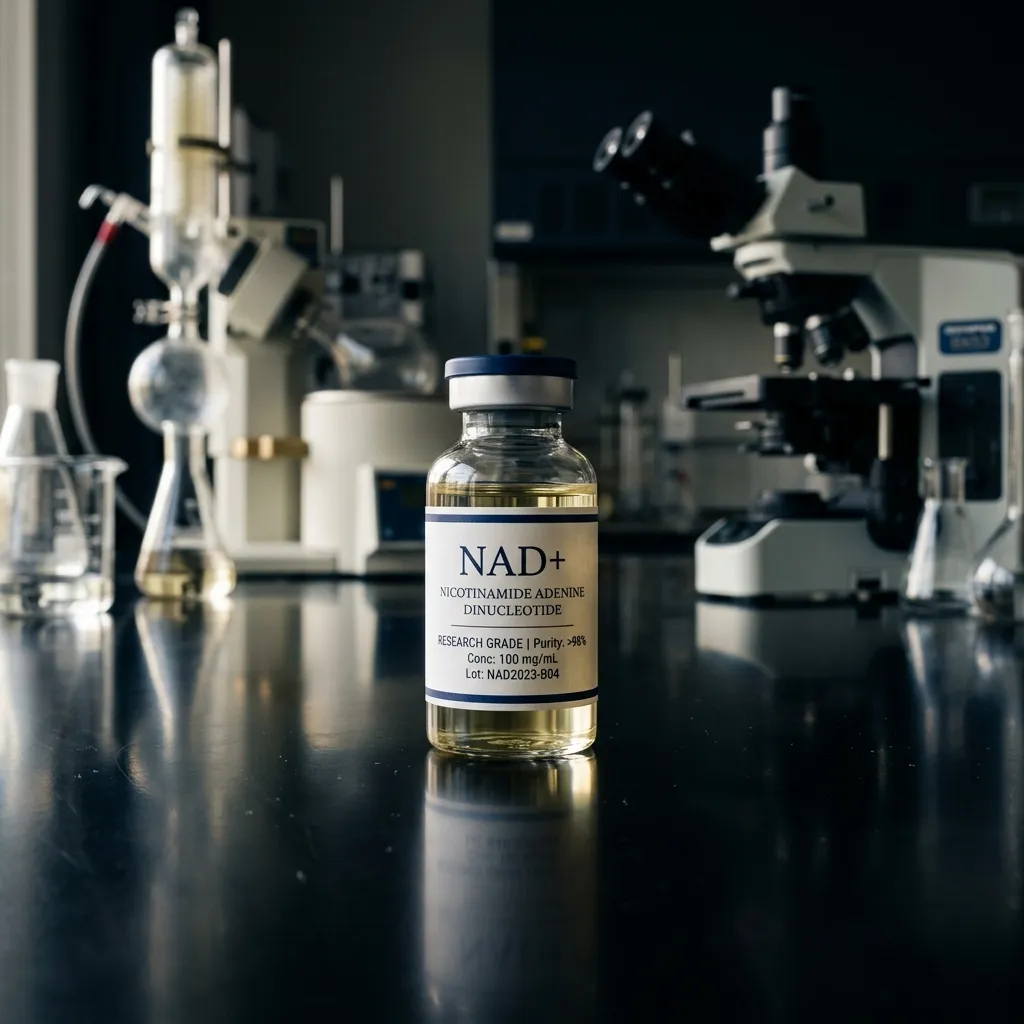
How to Read a Peptide Certificate of Analysis (COA): HPLC & Mass Spec Purity Testing Explained
Every research peptide protocol rests on a single, unglamorous assumption: that the vial on the bench actually contains what the label says it does, at the purity the supplier claims. That assumption is only as good as the documentation behind it. A Certificate of Analysis (COA) is the laboratory paper trail that turns "the supplier says so" into an independently verifiable fact — and learning to actually read one, rather than simply glance at a purity percentage, is one of the most consequential skills a peptide researcher can develop.
This guide breaks down exactly what a COA contains, how High-Performance Liquid Chromatography (HPLC) and Mass Spectrometry (MS) testing work, how to interpret a real chromatogram, and how to tell the difference between rigorous third-party verification and a marketing document dressed up to look like one.
Quick answer: A trustworthy peptide COA is issued by an independent, third-party laboratory, tied to a specific batch/lot number, and reports two distinct data points — purity (via HPLC) and molecular identity (via mass spectrometry). A purity floor of ≥99% is the accepted standard for quantitative research; documentation lacking a lot number or an independent testing lab should not be trusted.
What a Certificate of Analysis Actually Contains
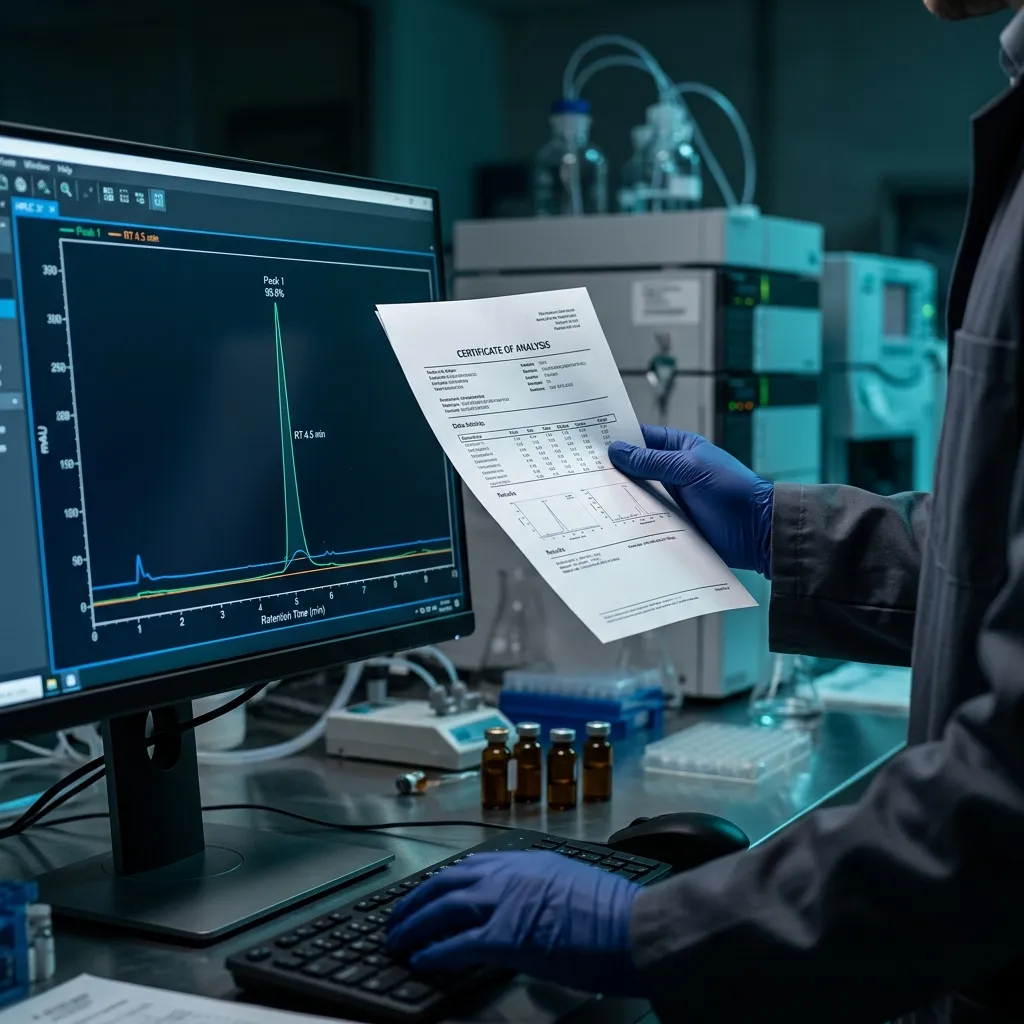
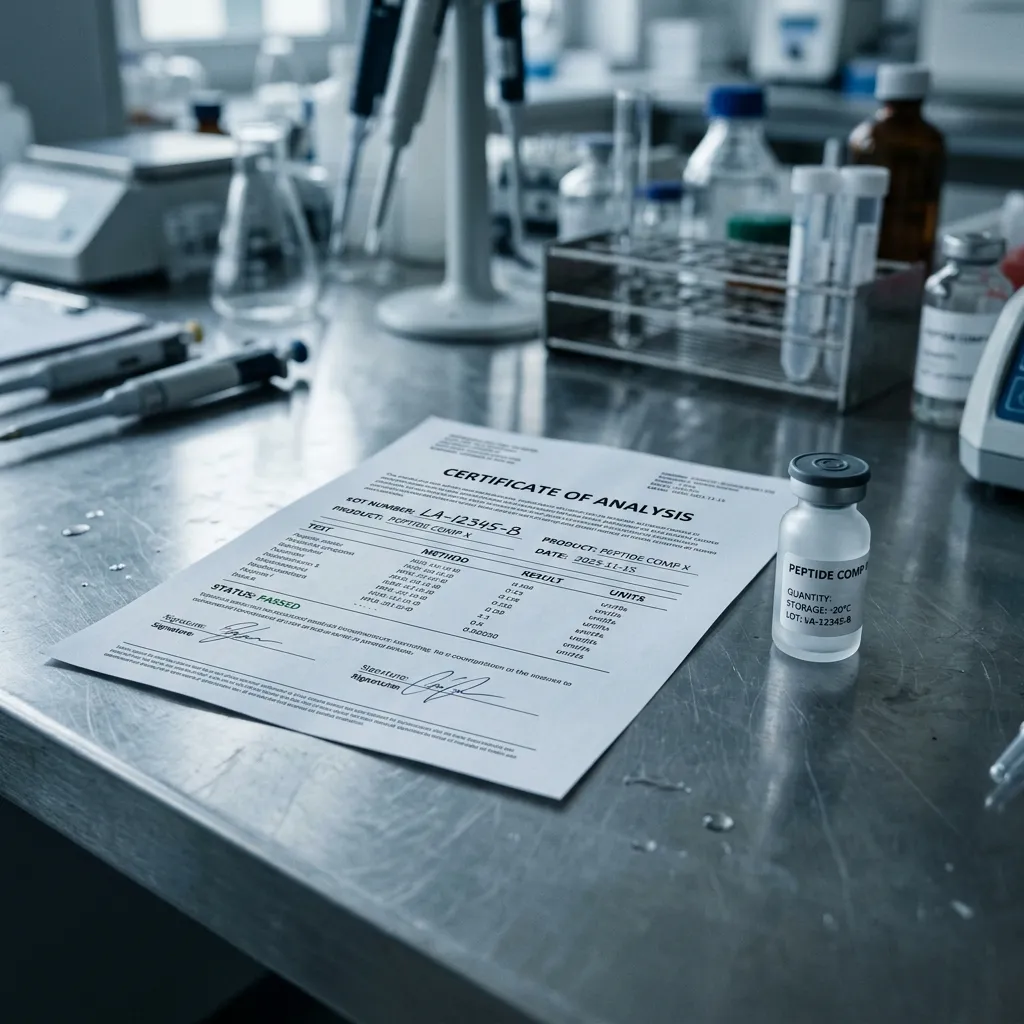
A properly issued COA is a structured laboratory document, not a marketing PDF. At minimum, a legitimate certificate should include: the exact compound name and its molecular formula, a unique batch or lot number matching the number printed on the vial, the date the analysis was performed, the name of the testing laboratory (and ideally its accreditation), the measured purity percentage from HPLC, and the confirmed molecular weight from mass spectrometry. Missing any one of these fields is a red flag — a purity number with no lot reference cannot be tied to the specific vial in a researcher's hand, and it may as well not exist.
At The Looksmaxxing Lab, every production batch — from BPC-157 to Semaglutide — is quarantined until an independent, ISO-certified US laboratory returns a full HPLC and LC-MS report. Every lot-specific COA in our catalog is published, unedited, in our public Certificates of Analysis (COA) Library so researchers can verify a vial before it ever enters a protocol.
Where Impurities Actually Come From: A Brief Look at Peptide Synthesis
To understand why purity testing is necessary at all, it helps to understand how a peptide is built in the first place. The overwhelming majority of research peptides are manufactured using Solid-Phase Peptide Synthesis (SPPS), a process in which amino acids are added one at a time to a growing chain that is chemically anchored to an insoluble resin bead. Each cycle involves removing a protective chemical group from the previous amino acid, then coupling the next amino acid in the sequence, then washing away excess reagent before the cycle repeats.
This sounds mechanical and precise, and in a well-controlled laboratory it largely is — but every single coupling step carries a small statistical chance of failure. A coupling reaction might run to only 98% or 99% completion rather than 100%, meaning a fraction of the growing chains on the resin do not receive that amino acid at all. Over a peptide sequence with 20, 30, or even 39 amino acids (as with longer metabolic peptides), these small per-step inefficiencies compound. The result is a final crude product that contains the correct, full-length peptide alongside a population of shorter, incomplete "truncated" sequences, along with possible side reactions like incomplete deprotection or racemization at individual residues.
Purification — typically preparative HPLC performed after synthesis, separate from the analytical HPLC used for the COA — is the step that removes as much of this truncated and side-reaction material as possible before the peptide is lyophilized into its final powder form. No purification process is perfect, which is precisely why analytical testing on the finished product remains necessary even after a rigorous purification step. The COA is the record of how effective that entire synthesis-and-purification pipeline actually was for a specific batch.
HPLC Explained: How Purity Percentage Is Actually Measured
High-Performance Liquid Chromatography works by forcing a liquid sample through a column packed with a solid adsorbent material under high pressure. Different molecules in the sample — the target peptide, any truncated sequences, residual synthesis byproducts, or degradation products — travel through the column at different speeds based on their chemical properties. Each component exits the column at a different "retention time" and is recorded by a detector, producing the chromatogram graph seen on a COA.
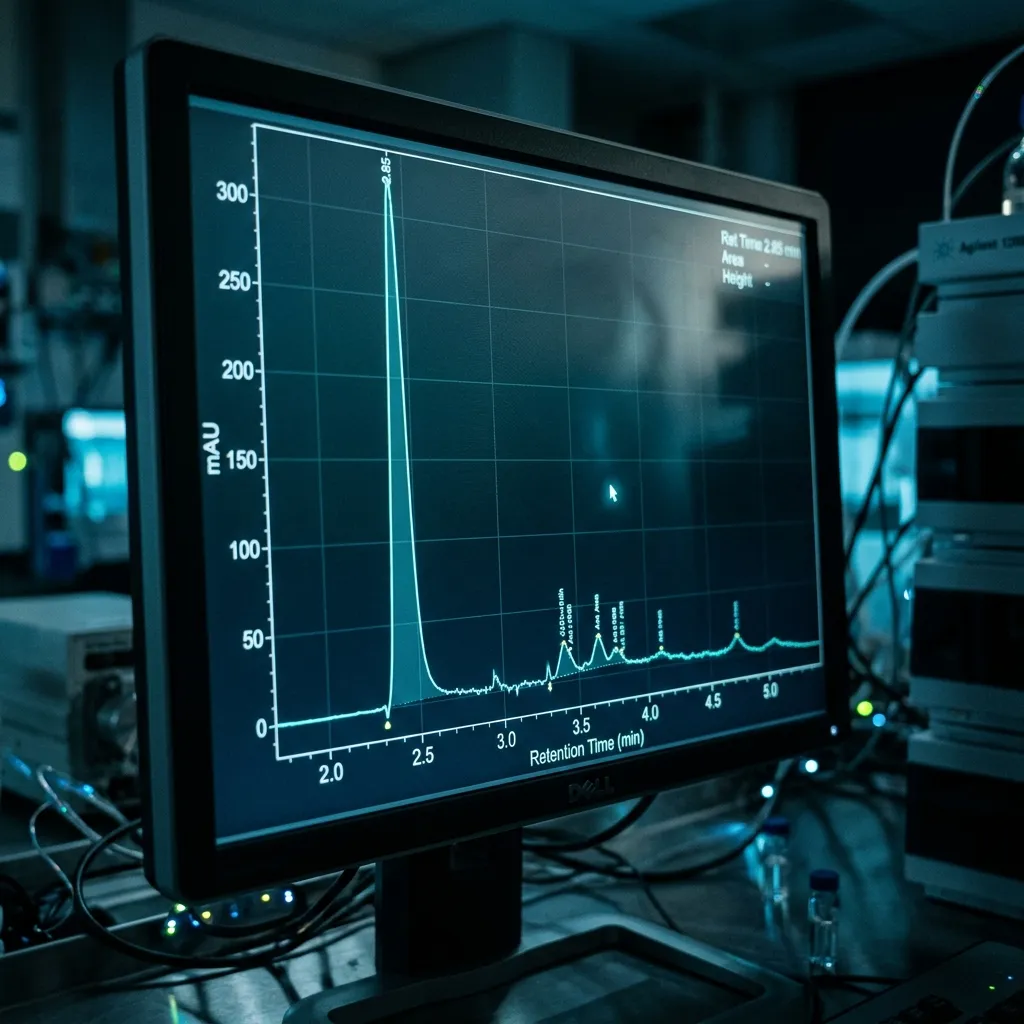
The reported purity percentage is calculated as the area under the main, dominant peak divided by the total area under all peaks in the chromatogram. If 99.2% of the total peak area belongs to a single sharp peak at the expected retention time for the target peptide, the batch is reported as 99.2% pure. The remaining fraction represents everything else in the vial that isn't the intended compound.
Why HPLC Alone Isn't Enough
HPLC is extremely good at telling you how homogeneous a sample is — but it cannot, by itself, tell you what that dominant peak actually is. A truncated or structurally similar impurity can co-elute at nearly the same retention time as the correct peptide, inflating the reported purity without the sample actually being what it claims to be. This is precisely why a rigorous COA pairs HPLC purity data with a second, independent test: mass spectrometry.
Mass Spectrometry (ESI-MS): Confirming Identity, Not Just Purity
Electrospray Ionization Mass Spectrometry (ESI-MS) ionizes the sample and measures the mass-to-charge ratio of the resulting ions, which allows the lab to calculate the precise molecular weight of the compound. This number is then compared against the theoretical molecular weight of the target peptide. If they match within an acceptable tolerance, the compound's structural identity is confirmed independent of the purity measurement entirely.
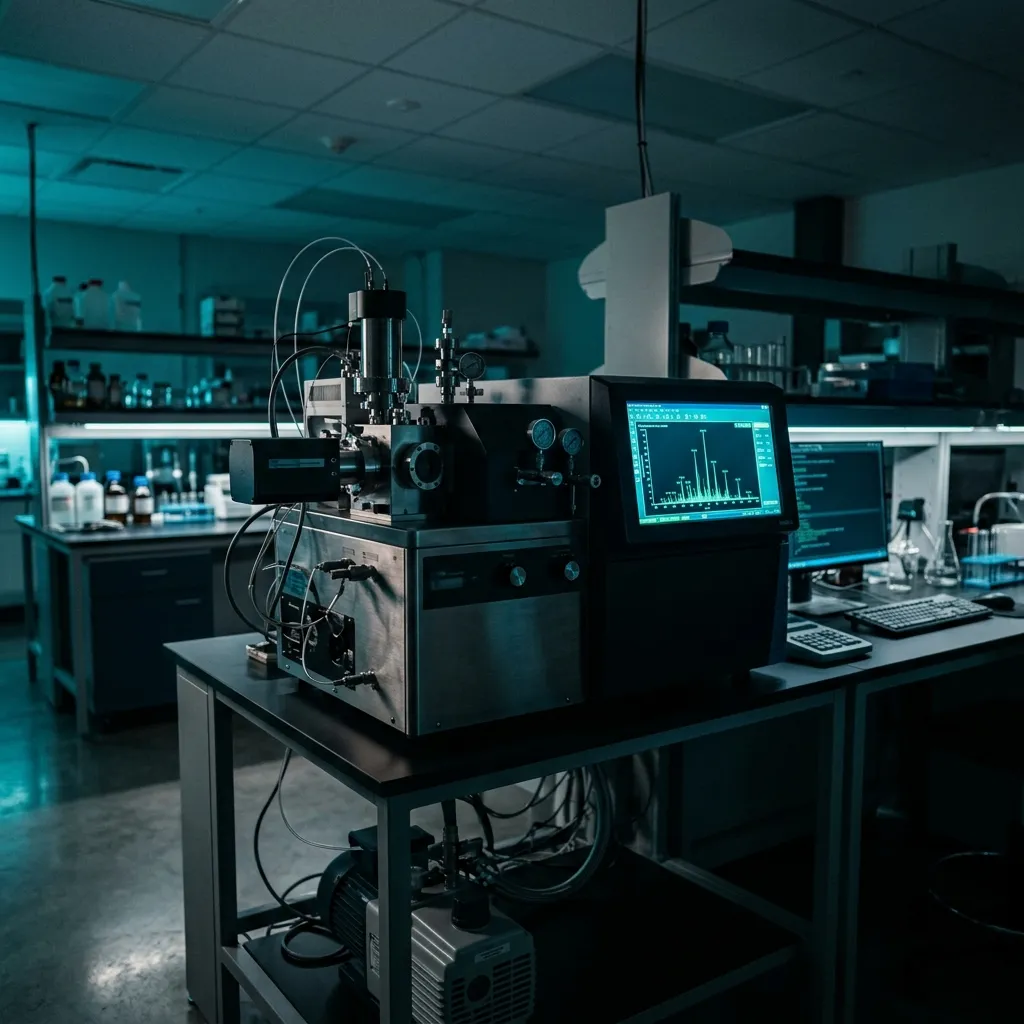
This is the critical distinction researchers frequently overlook: purity measures how clean the sample is; mass spectrometry confirms what the sample actually is. A COA reporting only a purity percentage, with no corresponding molecular weight confirmation, has not actually proven the vial contains the labeled peptide — it has only shown that whatever is in the vial is fairly uniform. Every compound across our catalog, including growth-hormone-axis peptides like CJC-1295 / Ipamorelin and Tesamorelin, is verified by both methods.
Reading a Real Chromatogram: Main Peak vs. Impurities
When reviewing an actual chromatogram, look for one tall, sharp, symmetrical peak at the expected retention time, with minimal "shoulder" distortion. Small peaks elsewhere on the graph represent impurities — commonly truncated sequences from incomplete Solid-Phase Peptide Synthesis (SPPS) coupling steps, deletion sequences, or oxidation byproducts. The height and count of these secondary peaks, not just the headline purity number, tells you how clean the synthesis process actually was.
| Reported Purity Band | Research Suitability |
|---|---|
| ≥99% | Accepted standard for quantitative dose-response work and publication-grade research |
| 95-98% | Generally limited to preliminary screening assays; not ideal for quantitative work |
| <95% | Impurity load high enough to meaningfully compromise reproducibility |
E-E-A-T Focus: Why Independent, Third-Party Testing Matters
In-house purity testing carries an unavoidable conflict of interest: the party synthesizing the compound is also the party grading its own homework. Independent verification removes that conflict by placing the analysis in the hands of a laboratory with no financial stake in the result. This is why every batch sold by The Looksmaxxing Lab is sent to an independent, ISO-certified US laboratory rather than tested internally — and why the resulting reports, not summarized claims, are published in full for every compound in our shop.
Beyond HPLC and Mass Spec: Complementary Testing Methods
While HPLC and mass spectrometry form the core of most peptide COAs, several complementary tests are sometimes included, particularly for compounds used in more sensitive research applications. Amino Acid Analysis (AAA) hydrolyzes the peptide back into its constituent amino acids and quantifies each one, cross-checking the resulting ratio against the expected sequence composition — a useful secondary confirmation of identity that is independent of both HPLC retention time and mass spectrometry. Endotoxin testing, typically performed via a Limulus Amebocyte Lysate (LAL) assay, screens for bacterial endotoxin contamination that can arise during manufacturing and is particularly relevant for any in-vivo research model, since endotoxins can trigger inflammatory responses independent of the peptide's own biological activity. Residual solvent testing checks for trace amounts of the organic solvents used during synthesis and purification (such as acetonitrile or trifluoroacetic acid) that may remain in the lyophilized powder if not fully removed.
Not every supplier includes all of these on a standard COA, and for most in-vitro screening work, HPLC purity and mass spectrometry identity confirmation remain the two non-negotiable data points. But for researchers designing more sensitive in-vivo protocols, it is reasonable to ask a supplier whether endotoxin data is available for a given batch, particularly for compounds intended for injection-based research models.
How COA Data Should Inform Experimental Design
A COA is not just a compliance document to file away — the specific numbers on it should actively shape how a protocol is designed. A batch reported at 99.6% purity with a clean, single-peak chromatogram gives a researcher confidence to proceed with quantitative dose-response work without needing to build in additional controls for impurity-driven variance. A batch closer to the 95-98% range, by contrast, warrants a more conservative interpretation of results, since a larger fraction of the sample by mass is something other than the intended compound.
Molecular weight confirmation matters just as much for protocol design as the purity figure. If the confirmed molecular weight on a COA differs even slightly from the theoretical value for the target sequence, that discrepancy should be resolved with the supplier before the batch is used — a small but real difference can indicate a missing or substituted residue that would not necessarily be obvious from the HPLC purity number alone. Treating the COA as an input to experimental design, rather than a formality to glance at once, is one of the simplest ways researchers can improve the reliability of their own results.
Red Flags: How to Spot an Unreliable Supplier or Fabricated COA
- No lot or batch number. A COA that cannot be matched to the specific vial received is functionally unverifiable.
- The same document for every order. Reused, generic PDFs presented as current test results indicate the supplier is not actually testing individual batches.
- Purity data with no identity confirmation. An HPLC percentage with no mass spectrometry data cannot prove the vial contains the correct compound.
- No named, independent testing laboratory. Anonymous or unnamed "in-house" results offer no accountability.
- Documents that are image screenshots rather than structured lab reports. Legitimate laboratories issue reports with consistent formatting, methodology notes, and instrument identifiers — not cropped screenshots.
- A reported molecular weight that doesn't match the theoretical value for the labeled sequence. Even a small unexplained discrepancy is worth resolving directly with the supplier before use.
- Pressure to purchase without documentation available upfront. A supplier confident in its testing process makes COAs available before purchase, not only after a complaint.
Building a Repeatable Verification Habit
Reading a COA should not be a one-time exercise performed at the moment of purchase and then forgotten. Because peptides are ordered in batches and batches change over time — even from the same trusted supplier — the most rigorous research protocols treat COA verification as a recurring checkpoint. Before introducing any new shipment into an active experimental protocol, cross-reference the lot number printed on the vial against the lot number listed on the corresponding COA. If the two do not match, or if a reorder arrives with a lot number identical to a previous shipment, treat this as an immediate documentation discrepancy worth resolving with the supplier before use.
It is also worth maintaining a simple internal log — batch number, date received, purity percentage, and confirmed molecular weight — for every compound used across a longitudinal study. This habit accomplishes two things: it creates an audit trail that strengthens the reproducibility case for any published findings, and it makes any unexpected shift in experimental results easy to cross-check against a possible change in raw material quality rather than a change in the biological system being studied.
Applying This Across Compound Classes
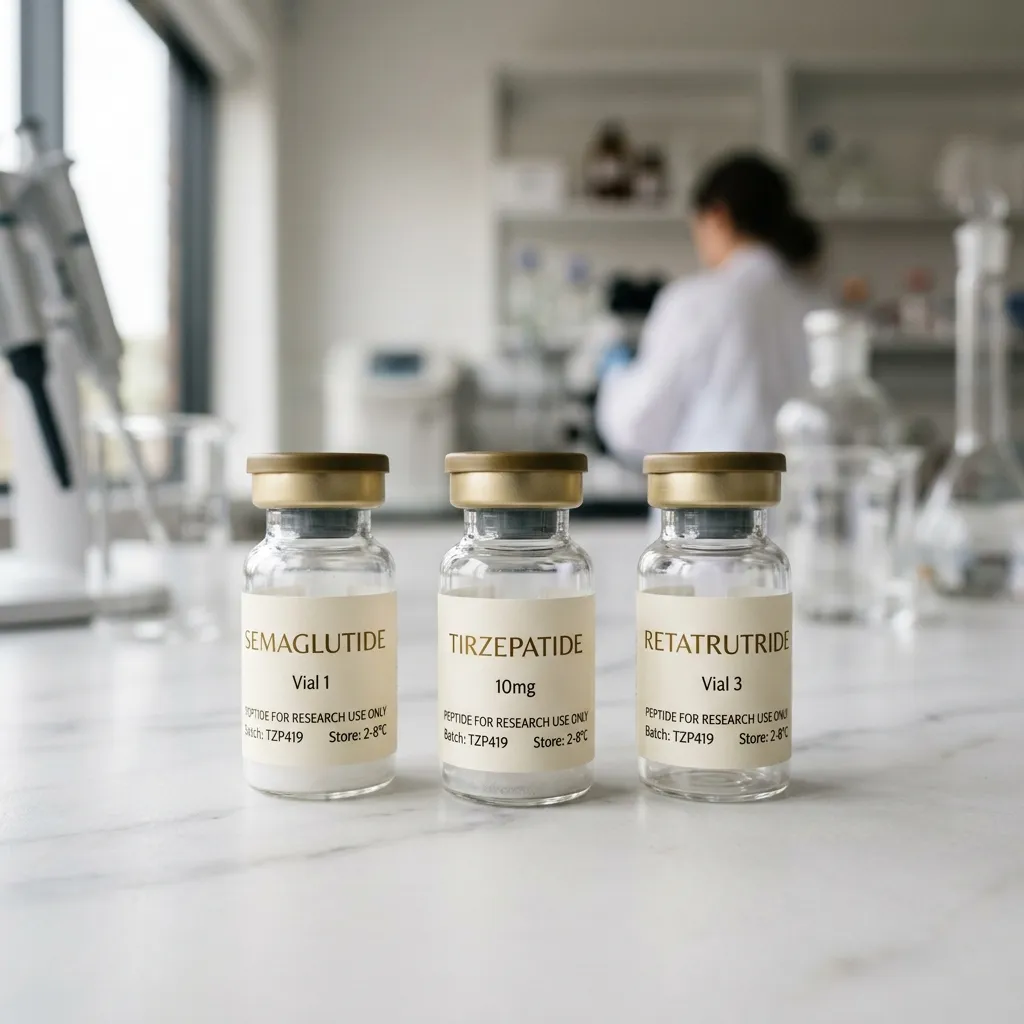
Purity and identity verification matter identically across every category of research compound, though the synthesis complexity — and therefore the risk of truncation — scales with peptide length. Long-chain metabolic peptides such as Semaglutide, Tirzepatide, and Retatrutide are considerably harder to synthesize cleanly than short sequences, making independent verification especially important.
The same standard applies to structural and regenerative compounds like BPC-157, TB-500, and GHK-Cu; growth-hormone-axis secretagogues including CJC-1295 No-DAC, Ipamorelin, and Sermorelin; neuro-focused peptides like Selank and Semax; hormonal and longevity-focused compounds such as Kisspeptin, MOTS-C, NAD+, and Epithalon; and cosmetic-research blends including Melanotan II and the Glow Blend. Every one of these is only as reliable as the COA behind it.
Once purity and identity are verified, the next variable researchers need to control is handling — our companion guide on peptide reconstitution and storage covers bacteriostatic water, shelf-life windows, and the cold-chain practices that preserve a verified compound's integrity after the vial is opened. For general purity and sourcing questions beyond this guide, see our FAQ page.
Comprehensive Frequently Asked Questions (FAQ)
What is a Certificate of Analysis (COA) for a research peptide?
A Certificate of Analysis is an independent laboratory report tied to a specific manufacturing batch (lot) of a peptide. It documents the compound's measured purity (typically via HPLC), its confirmed molecular identity (typically via mass spectrometry), the testing methodology used, the date of analysis, and the issuing laboratory. A legitimate COA lets a researcher verify — rather than assume — what is actually inside a given vial.
What is the difference between HPLC and Mass Spectrometry testing?
High-Performance Liquid Chromatography (HPLC) separates a sample into its individual chemical components and measures what percentage of the total sample is the target peptide versus impurities or truncated sequences — this is the purity number. Mass Spectrometry (typically ESI-MS) measures the molecular weight of the separated compound to confirm it is structurally the correct peptide. Purity without identity confirmation is incomplete: a sample can be '99% pure' and still be the wrong molecule if only HPLC was run.
What purity percentage should researchers look for in a peptide COA?
For quantitative dose-response work or any research intended for publication, a purity floor of 99% or higher is the accepted laboratory standard. Purity in the 95-98% range is generally considered acceptable only for preliminary screening assays, and anything below roughly 95% introduces enough variability from impurities and truncated sequences to compromise reproducibility.
How do I read a chromatogram peak on a COA?
On an HPLC chromatogram, the x-axis is retention time and the y-axis is detector absorbance. The target peptide should produce one dominant, sharp peak accounting for the vast majority of the total peak area — this area-under-curve percentage is the reported purity. Small secondary peaks represent impurities, degradation products, or truncated sequences from incomplete synthesis; the smaller and fewer these secondary peaks are, the cleaner the batch.
What does 'truncated sequence' mean and why does it matter?
Peptides are built one amino acid at a time during Solid-Phase Peptide Synthesis (SPPS). If a coupling step fails partway through, the result is a shorter, incomplete ('truncated') peptide chain that still ends up in the final vial alongside the correct compound. Truncated sequences can competitively bind target receptors without producing the intended signaling effect, introducing noise or confounding results into a research protocol.
Can I trust a manufacturer's in-house purity claim without independent testing?
In-house testing carries an inherent conflict of interest — the same party that synthesizes the compound is also grading its own quality. Independent, third-party laboratory verification removes that conflict entirely. Researchers should treat any COA that does not name an independent testing lab, or that cannot be tied to a specific batch number, with significant skepticism.
What's the difference between purity and identity confirmation on a COA?
Purity (from HPLC) tells you how much of the vial's contents is a single, consistent compound. Identity confirmation (from Mass Spectrometry) tells you which compound that is. A COA that only reports a purity percentage without a corresponding molecular weight/identity confirmation cannot actually prove the vial contains the labeled peptide at all — it may simply be a different molecule at high purity.
How do I verify a COA is batch-specific and not reused across every order?
A legitimate, batch-specific COA references a unique lot or batch number that should also appear printed on the vial's label. If a supplier presents the identical COA document for every order regardless of when it was purchased, or the document has no visible lot number, that is a strong indicator the documentation is not tied to the actual product shipped and should not be relied upon.
Where can I find COA documentation for The Looksmaxxing Lab's peptides?
Every production batch sold by The Looksmaxxing Lab is sent to an independent, ISO-certified US laboratory for HPLC and LC-MS analysis before it is released for sale. Lot-specific, downloadable Certificates of Analysis for every compound in our catalog are publicly available in our Certificates of Analysis (COA) Library.
Do I need a prescription to order COA-verified research peptides?
No. The compounds sold by The Looksmaxxing Lab are classified strictly as Research Use Only (RUO) laboratory reagents. They are not FDA-approved therapeutics and are not intended for human or veterinary consumption, so no medical prescription is required for qualified researchers.