Kisspeptin-10 & MOTS-C: Research Peptides and the Female Hormonal-Metabolic Axis
Few areas of contemporary peptide research have accelerated as quickly as the study of the female hormonal-metabolic axis. As the fields of endocrinology, mitochondrial biology, and reproductive science converge, two compounds have moved to the center of laboratory attention: Kisspeptin-10, the master upstream regulator of the hypothalamic-pituitary-gonadal (HPG) axis, and MOTS-C, a 16-amino-acid mitochondrial-derived peptide (MDP) with a documented sex-dimorphic expression profile.
Individually, each compound represents a distinct and heavily cited research pathway. Together, they offer investigators a rare opportunity to study the intersection of two systems long treated as separate: the central neuroendocrine machinery that governs reproductive signaling, and the cellular bioenergetic machinery that governs metabolic adaptation. This article provides an exhaustive, laboratory-grade review of both compounds, their distinct mechanisms of action, and why an increasing number of research protocols investigating female physiology are designed around studying them in parallel.
Kisspeptin-10 and the Hypothalamic-Pituitary-Gonadal Axis
Kisspeptin-10 is the shortest bioactive fragment derived from the KISS1 gene product, a decapeptide that binds with high affinity to its cognate receptor, KISS1R (also known as GPR54), located on GnRH (gonadotropin-releasing hormone) neurons within the hypothalamus. Since its discovery, kisspeptin signaling has been established in the research literature as the single most critical upstream gatekeeper of the entire reproductive endocrine cascade — without adequate kisspeptin signaling, the pulsatile release of GnRH simply does not occur, and the downstream cascade of luteinizing hormone (LH) and follicle-stimulating hormone (FSH) secretion from the pituitary collapses.
Molecular Profile and Pulsatility Research
What makes Kisspeptin-10 such a heavily utilized research tool is its precision. Because GnRH neurons are diffusely distributed and difficult to access directly, kisspeptin administration provides researchers with a reproducible, controllable method for triggering measurable downstream LH pulses in laboratory models. Investigators studying the pulsatile architecture of the HPG axis — the frequency, amplitude, and timing of GnRH-driven hormone secretion — rely on kisspeptin-10 as a standardized upstream stimulus, allowing for precise before-and-after comparative measurements of gonadotropin output.
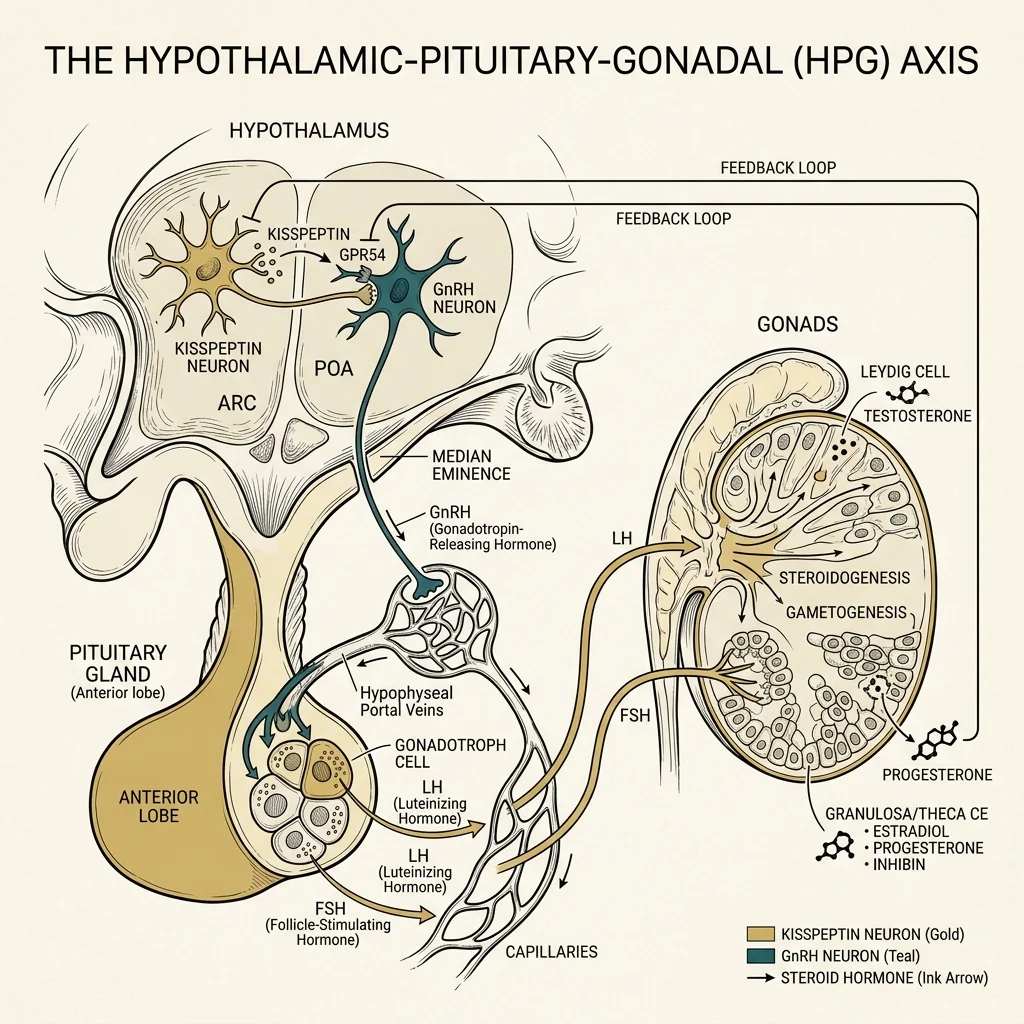
In female-physiology-focused research models specifically, kisspeptin signaling has attracted intense interest because KISS1 neuron populations in the hypothalamus are directly modulated by circulating estrogen levels, creating a feedback loop that researchers believe underlies the cyclical nature of the reproductive axis. This estrogen-kisspeptin relationship has made the peptide a central reference compound in laboratory models studying ovarian cycle dynamics, the onset of reproductive senescence, and the neuroendocrine shifts associated with the perimenopausal transition.
- GnRH Pulse Generation: Kisspeptin-10 is used to reliably trigger measurable GnRH neuron firing, allowing researchers to quantify downstream LH and FSH responses under controlled conditions.
- Estrogen Feedback Modeling: Because KISS1 neuron activity is directly influenced by circulating estrogen, kisspeptin research is central to modeling how estrogen fluctuation reshapes reproductive-axis output across the lifespan.
- Comparative Axis Mapping: Kisspeptin-10 serves as a standardized reference stimulus for comparing HPG axis responsiveness across different experimental models and age cohorts.
MOTS-C: A Mitochondrial-Derived Peptide at the Center of Metabolic Research
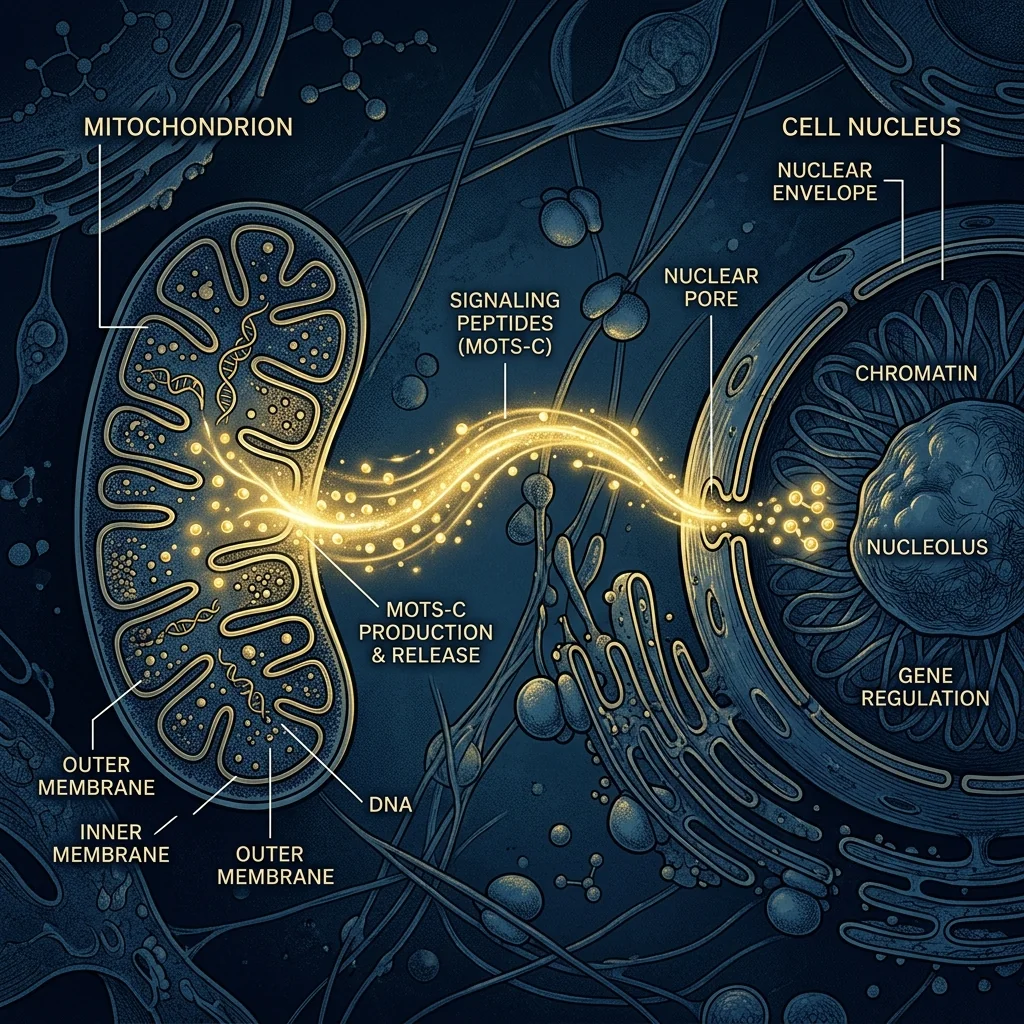
MOTS-C operates on an entirely different biological plane. Rather than being encoded by nuclear DNA like the overwhelming majority of the human proteome, MOTS-C is one of a small class of mitochondrial-derived peptides (MDPs) encoded directly within the mitochondrial genome itself. This unique genetic origin places MOTS-C at the epicenter of one of the fastest-growing subfields in cellular biology: mitochondrial-to-nuclear retrograde signaling, the process by which mitochondria actively communicate their metabolic status to the rest of the cell. For a full standalone treatment of MOTS-C's AMPK activation pathway and exercise-mimetic research profile, see our companion guide, MOTS-C Peptide: Mitochondrial Signaling and the AMPK Activation Pathway.
Mitochondrial-to-Nuclear Signaling and the AMPK Pathway
Under conditions of cellular or metabolic stress, MOTS-C is understood to translocate from the mitochondria toward the nucleus, where it is studied for its interaction with AMP-activated protein kinase (AMPK) — the cell's master energy-sensing enzyme. AMPK activates when the ratio of AMP to ATP rises, signaling that cellular energy reserves are being depleted. MOTS-C research investigates how this peptide amplifies AMPK signaling, subsequently influencing glucose uptake, fatty acid oxidation, and the transcription of genes governing mitochondrial biogenesis.
Of particular relevance to female-physiology-focused research is the well-documented sex-dimorphic expression profile of MOTS-C. Published research models have measured declining circulating MOTS-C levels in postmenopausal cohorts relative to premenopausal controls, correlating with the well-established decline in circulating estrogen. This has led researchers to investigate an estrogen-mitochondrial crosstalk hypothesis: that ovarian hormone signaling may directly regulate mitochondrial peptide expression, positioning MOTS-C as a candidate biomarker and research tool for studying metabolic shifts across the female reproductive lifespan, including insulin sensitivity, visceral adiposity, and cardiometabolic risk models associated with the menopausal transition.
Comparing the Two Pathways
While Kisspeptin-10 and MOTS-C could not be more different in their molecular origin and site of action, researchers studying the broader female hormonal-metabolic axis increasingly view them as complementary rather than isolated tools. The table below summarizes the core mechanistic distinctions researchers must account for when designing comparative or combined protocols.
| Attribute | Kisspeptin-10 | MOTS-C |
|---|---|---|
| Sequence length | 10 amino acids | 16 amino acids |
| Genetic origin | Nuclear DNA (KISS1 gene) | Mitochondrial DNA |
| Primary receptor / target | KISS1R (GPR54) on GnRH neurons | AMPK signaling cascade |
| Site of action | Hypothalamus (central) | Intracellular / mitochondrial-nuclear axis |
| Primary research focus | Reproductive axis, GnRH pulsatility | Metabolic homeostasis, mitochondrial biogenesis |
Because these two pathways are entirely non-competing — one central and neuroendocrine, the other cellular and bioenergetic — researchers designing comprehensive female-physiology models frequently include both compounds to observe how reproductive-axis signaling and mitochondrial metabolic adaptation interact across a simulated hormonal timeline. This is particularly relevant to laboratory models investigating the perimenopausal transition, where declining estrogen output influences both KISS1 neuron activity and mitochondrial peptide expression simultaneously.
Research Applications in Perimenopause-Focused Laboratory Models
The perimenopausal transition represents one of the most biologically complex research windows in female physiology, characterized by irregular, declining, and eventually absent ovarian estrogen output. Because this transition simultaneously reshapes both HPG axis dynamics and systemic metabolic function, it has become a natural convergence point for kisspeptin and MOTS-C research programs. Investigators frequently structure comparative timeline models — pre-, peri-, and post-transition cohorts — to observe how KISS1 neuron sensitivity and circulating MOTS-C expression shift in tandem as estrogen output declines.
A second, closely related research thread examines cardiometabolic risk modeling. Postmenopausal physiology is independently associated in the literature with elevated visceral adiposity, reduced insulin sensitivity, and increased cardiovascular risk markers. Because MOTS-C sits directly at the intersection of mitochondrial energy metabolism and AMPK-driven glucose handling, it is frequently included as a candidate research tool for probing whether restoring or amplifying mitochondrial peptide signaling can meaningfully influence these downstream metabolic markers in laboratory models. Kisspeptin-10, in parallel, allows researchers to independently characterize how HPG axis sensitivity itself changes across the same physiological window — providing a two-pronged framework for separating central neuroendocrine decline from peripheral metabolic decline within the same experimental design.
Researchers should also note that both compounds are frequently referenced in comparative literature reviews alongside other reproductive- and longevity-focused peptides. Kisspeptin-10 is commonly benchmarked against other GnRH-pathway modulators, while MOTS-C is frequently studied alongside related mitochondrial-derived peptides such as Humanin and SHLP2 to build a fuller picture of the mitochondrial signaling family as a whole.
E-E-A-T Focus: Purity Verification for Reproductive and Mitochondrial Research Peptides
Precision matters enormously when studying signaling peptides that operate at nanomolar concentrations. A truncated or impure Kisspeptin-10 sequence can fail to reliably trigger GnRH pulses, corrupting downstream LH/FSH measurements. An impure MOTS-C batch can introduce confounding variables into AMPK-pathway assays, undermining reproducibility. For research requiring this level of signaling precision, independent verification of peptide identity and purity is non-negotiable.

At The Looksmaxxing Lab, every batch of Kisspeptin-10 and MOTS-C is synthesized via Solid-Phase Peptide Synthesis (SPPS), purified using preparative High-Performance Liquid Chromatography (HPLC) to eliminate truncated or deletion sequences, and verified for exact molecular weight through Electrospray Ionization Mass Spectrometry (ESI-MS). We maintain a strict ≥99% purity floor across every production lot, and all results are independently confirmed by a third-party, ISO-certified US laboratory — never relying solely on in-house or manufacturer claims.
Before incorporating either compound into a research protocol, investigators should review the lot-specific documentation. Our complete, publicly accessible Certificates of Analysis (COA) Library allows researchers to independently verify identity and purity for every batch of Kisspeptin-10, MOTS-C, and all other compounds in our catalog.
Designing Synergistic Research Protocols
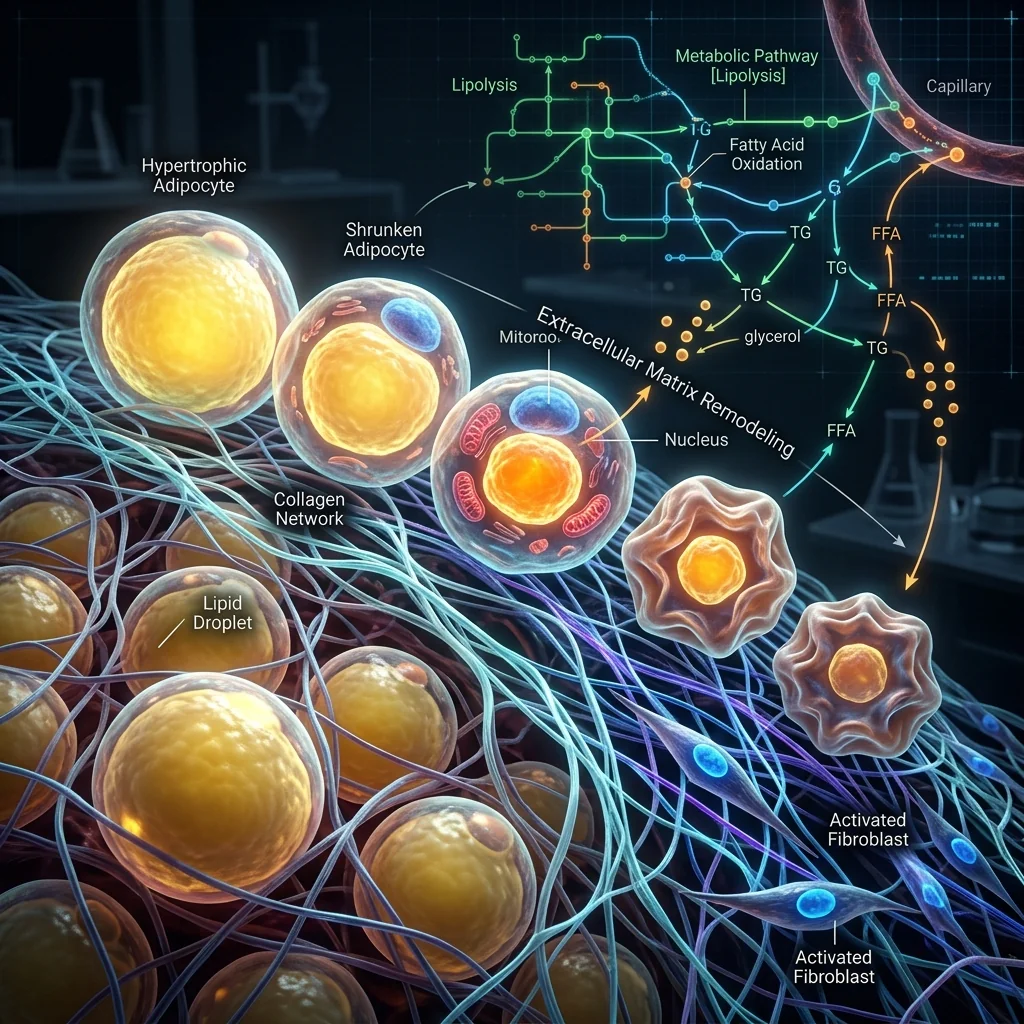
Researchers building comprehensive hormonal-metabolic models often extend their protocols beyond Kisspeptin-10 and MOTS-C alone. A common design pairs MOTS-C with longevity-focused compounds such as Epithalon to study the intersection of mitochondrial energy signaling and cellular senescence markers. Others cross-reference metabolic peptide research — including the adipocyte dynamics discussed in our companion article on GLP-1 agonists and tissue laxity — to build a fuller picture of how hormonal and metabolic pathways interact across female-physiology-focused laboratory models.
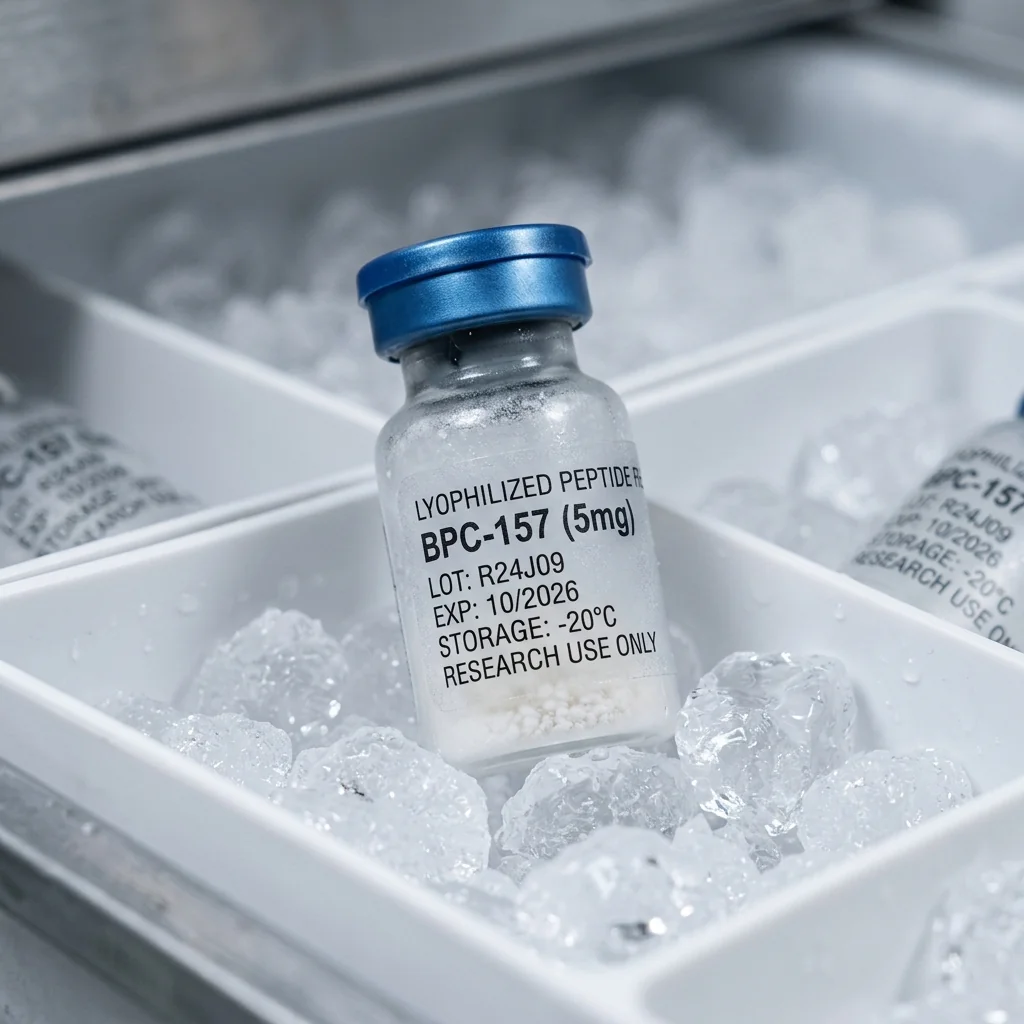
Regardless of protocol design, researchers should use the Peptide Reconstitution Calculator to precisely determine molar concentrations for both Kisspeptin-10 and MOTS-C prior to any in-vitro or in-vivo assay, ensuring dosing accuracy across every replicate — see our full reconstitution and storage guide for the complete protocol.
Limitations and Considerations for Experimental Design
Researchers new to either compound should approach experimental design with several important caveats in mind. Kisspeptin-10 signaling is highly dose- and context-dependent — continuous, non-pulsatile exposure to kisspeptin agonism has been observed in the literature to produce a desensitizing effect on KISS1R, the opposite of the intended stimulatory response. This mirrors the well-documented pulsatility requirement seen in GnRH signaling itself, and researchers must design dosing intervals that respect this pulsatile architecture rather than assuming a simple linear dose-response relationship.
MOTS-C research carries its own methodological considerations. Because circulating MOTS-C levels naturally fluctuate with exercise, fasting state, and time of day, baseline sampling protocols must be tightly standardized across all experimental cohorts to avoid conflating natural physiological variance with peptide-induced effects. Researchers comparing pre- and post-menopausal cohorts should additionally control for confounding variables such as body composition and habitual physical activity level, both of which independently influence mitochondrial peptide expression.
Finally, because both compounds sit at the intersection of rapidly evolving research fields, investigators should treat published findings as an active, evolving body of literature rather than settled mechanism. Reproducibility across independent laboratories remains an ongoing area of methodological refinement for both the kisspeptin and mitochondrial-derived peptide research communities.
Comprehensive Frequently Asked Questions (FAQ)
What is Kisspeptin-10?
Kisspeptin-10 is the shortest bioactive fragment of the KISS1 gene product, a 10-amino-acid peptide that acts as the master upstream regulator of the hypothalamic-pituitary-gonadal (HPG) axis. In research models, it is used to study pulsatile GnRH (gonadotropin-releasing hormone) release and downstream LH/FSH secretion.
What is MOTS-C?
MOTS-C is a 16-amino-acid mitochondrial-derived peptide (MDP) encoded directly within mitochondrial DNA rather than the nuclear genome. It is studied for its role as a mitochondrial-to-nuclear signaling molecule that interfaces with the AMPK pathway and cellular energy homeostasis.
How does Kisspeptin-10 differ from MOTS-C in mechanism?
Kisspeptin-10 operates centrally, binding to the KISS1R (GPR54) receptor on GnRH neurons in the hypothalamus to regulate reproductive-axis signaling. MOTS-C operates at the cellular level, translocating from the mitochondria toward the nucleus to modulate AMPK activation and metabolic gene transcription. They act on entirely distinct, non-competing pathways.
Why is MOTS-C considered 'sex-dimorphic' in research literature?
Published research models have documented that circulating MOTS-C levels and its downstream signaling activity differ measurably between male and female physiology, with estrogen appearing to modulate mitochondrial expression of the peptide. This sex-dimorphic profile is why MOTS-C is frequently included in female-physiology-focused metabolic research protocols.
What is the AMPK pathway and why does it matter in MOTS-C research?
AMP-activated protein kinase (AMPK) is a central cellular energy sensor that activates when ATP levels fall relative to AMP. MOTS-C is studied for its proposed ability to activate AMPK signaling, influencing glucose uptake, fatty acid oxidation, and mitochondrial biogenesis in metabolic research models.
How should Kisspeptin-10 be stored and reconstituted?
Lyophilized Kisspeptin-10 should be stored at -20°C, protected from light and moisture. Once reconstituted with bacteriostatic water, it should be refrigerated at 2°C to 8°C and used within the window defined by your specific research protocol to preserve peptide-bond integrity.
Can Kisspeptin-10 and MOTS-C be studied together in the same protocol?
Yes. Because they operate on distinct, non-overlapping pathways — one central and reproductive-axis-focused, the other cellular and mitochondrial-focused — researchers frequently include both compounds in comparative female-physiology models investigating the intersection of hormonal signaling and metabolic regulation.
How is purity verified for Kisspeptin-10 and MOTS-C?
Both compounds are synthesized via Solid-Phase Peptide Synthesis (SPPS) and purified using preparative High-Performance Liquid Chromatography (HPLC) to remove truncated or deletion sequences. Final molecular identity is confirmed through Electrospray Ionization Mass Spectrometry (ESI-MS), documented at a ≥99% purity floor.
Where can I find the COA documentation for these peptides?
Every production batch of our Kisspeptin-10 and MOTS-C is tested by an independent, third-party US laboratory. Lot-specific Certificates of Analysis are publicly available in our COA Library for full traceability before use in any research protocol.
Do I need a prescription to purchase Kisspeptin-10 or MOTS-C for research?
No. Both compounds are classified strictly as Research Use Only (RUO) laboratory reagents. They are not FDA-approved therapeutics, are not intended for human or veterinary consumption, and therefore do not require a medical prescription for qualified researchers.