Tesamorelin vs. Retatrutide: Comparing Visceral Fat Research Compounds in Female Physiology Studies
Not all adipose tissue behaves the same way in laboratory models, and not all research peptides target it through the same mechanism. As female-physiology body composition research has matured, two compounds have emerged as the dominant reference points for investigating visceral fat specifically: Tesamorelin, a stabilized Growth Hormone Releasing Hormone (GHRH) analog with a uniquely well-documented visceral-fat research profile, and Retatrutide, an engineered triple agonist peptide studied for aggressive, multi-pathway metabolic effects.
This article provides a detailed, side-by-side mechanistic comparison of both compounds, explains why visceral adipose tissue (VAT) is treated as a distinct research target from subcutaneous fat, and outlines how researchers are increasingly combining both peptides to build more complete body-composition models in female-physiology-focused protocols. Understanding these mechanistic distinctions is essential before designing any comparative or combined experimental protocol, since conflating the two compounds' research profiles can lead to misinterpreted outcomes.
Visceral Fat vs. Subcutaneous Fat: Why the Distinction Matters
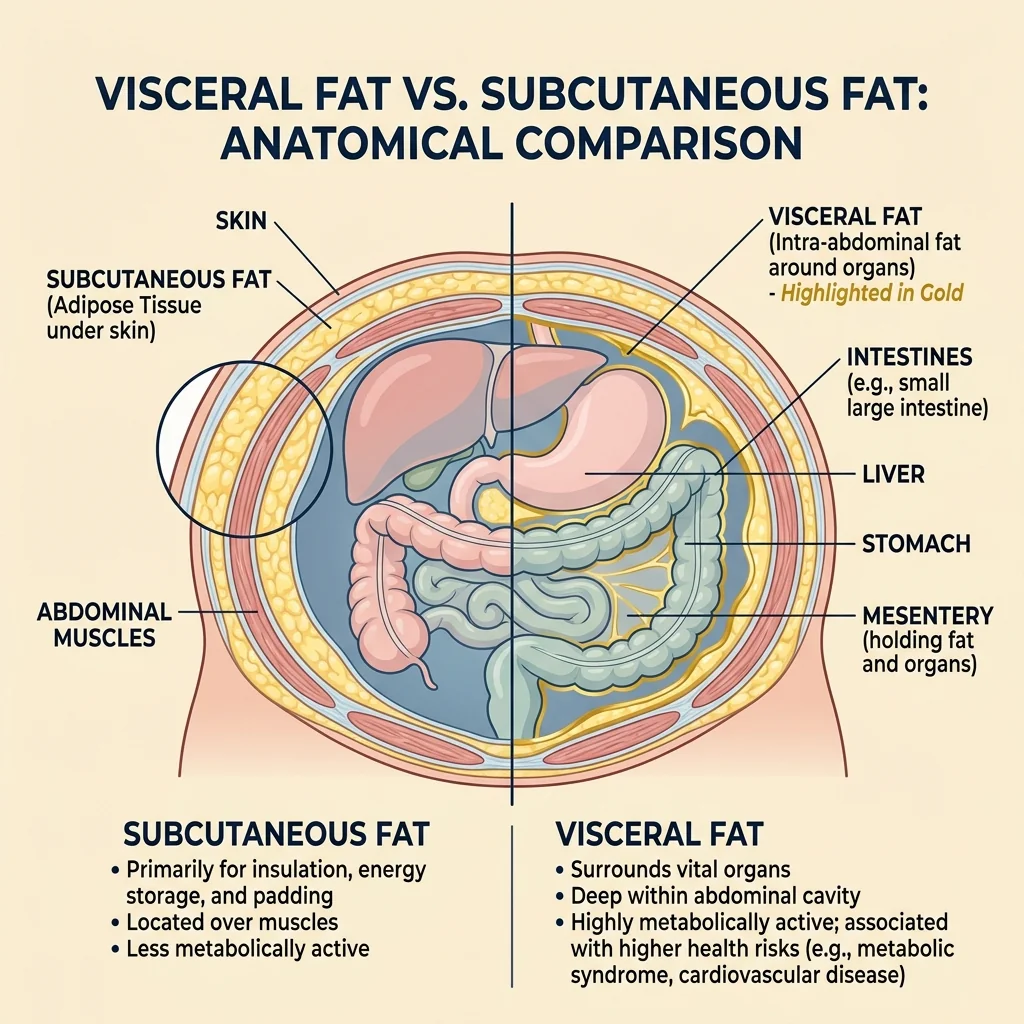
Before comparing the two compounds, it is essential to understand why researchers treat visceral adipose tissue as mechanistically distinct from subcutaneous fat. Visceral fat accumulates around and within the abdominal organs, is metabolically active, and is independently associated in the research literature with insulin resistance, systemic inflammation, and cardiometabolic risk markers. Subcutaneous fat, by contrast, sits beneath the dermis and behaves as a comparatively inert energy reservoir. A compound that reduces total body weight does not necessarily reduce visceral fat specifically — which is precisely why VAT-targeted research is treated as its own specialized subfield.
Tesamorelin: A GHRH Analog With a Documented Visceral Fat Profile
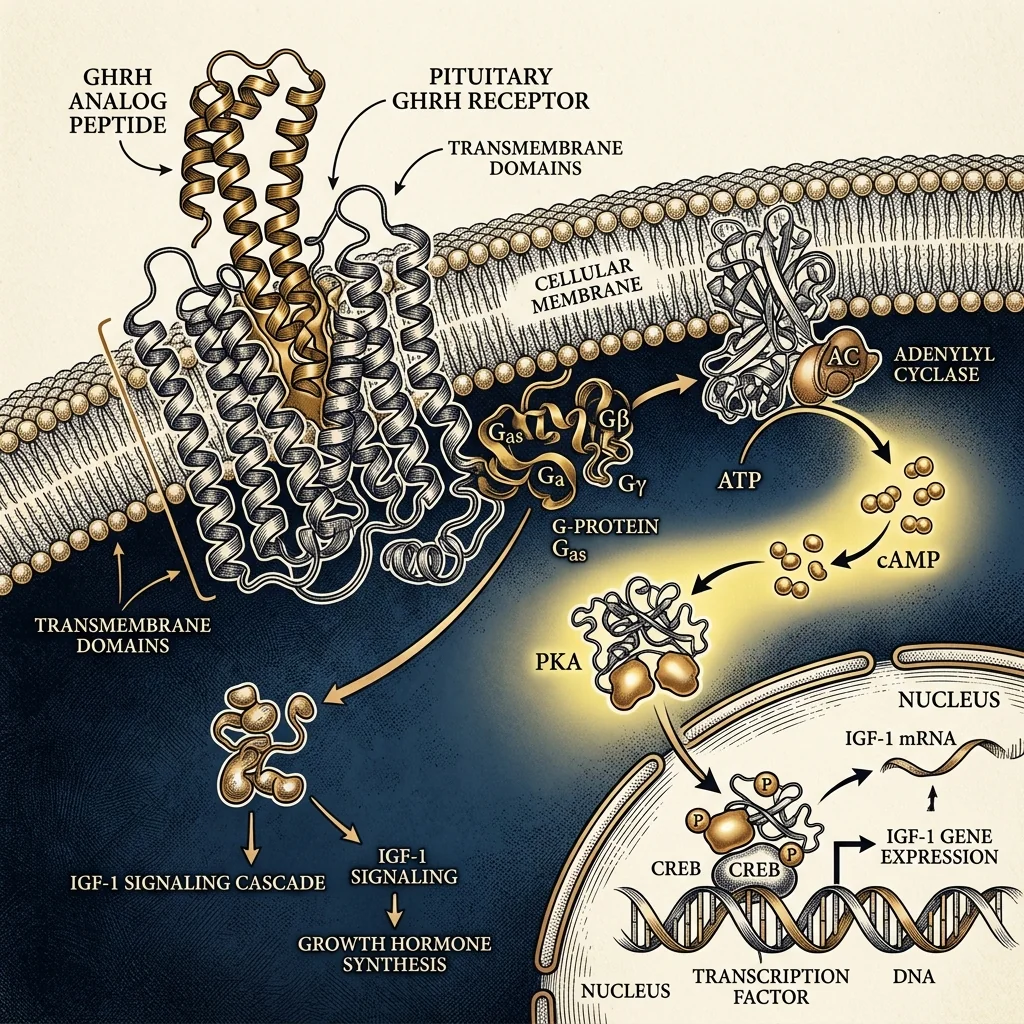
Tesamorelin is a 44-amino-acid stabilized analog of Growth Hormone Releasing Hormone, engineered with a trans-3-hexenoyl modification that improves resistance to enzymatic degradation relative to native GHRH. Mechanistically, Tesamorelin binds pituitary GHRH receptors to stimulate the pulsatile release of endogenous growth hormone, which in turn drives hepatic IGF-1 production.
The GH/IGF-1 Axis and Visceral Adipose Tissue
What distinguishes Tesamorelin from most other metabolic research peptides is the specificity of its published visceral-fat data. Research models tracking Tesamorelin administration over multi-month protocols have measured meaningful visceral adipose tissue reduction, with comparatively modest change to subcutaneous fat or total body weight — a signature research profile that makes it an unusually precise tool for VAT-specific investigation rather than blunt, non-specific weight-reduction study designs.
Because growth hormone signaling also intersects with lean mass and connective tissue biology, Tesamorelin is frequently a comparator compound in research models investigating body composition, waist-to-hip ratio changes, and IGF-1-driven metabolic markers in female-physiology-focused protocols specifically.
Retatrutide: A Triple GLP-1/GIP/Glucagon Agonist
Retatrutide represents a structurally distinct research approach. Rather than acting upstream through the GH/IGF-1 axis, Retatrutide is engineered as a triple agonist — a single peptide capable of simultaneously binding and activating GLP-1, GIP, and glucagon receptors. This tri-pathway engagement is studied for producing more pronounced appetite suppression, glycemic modulation, and overall metabolic rate effects than single- or dual-agonist compounds. For a complete breakdown of this mechanism, published Phase 2/3 evidence, and sourcing standards, see our dedicated guide, Retatrutide Peptide: Complete Research Guide to the Triple Agonist.

The addition of glucagon receptor activity is particularly notable in the research literature — unlike GLP-1 and GIP, which primarily influence insulin secretion and appetite, glucagon receptor engagement is studied for its role in increasing energy expenditure, making Retatrutide a research subject of significant interest for models investigating total metabolic rate alongside appetite regulation.
Comparative Mechanism Table
| Attribute | Tesamorelin | Retatrutide |
|---|---|---|
| Compound class | GHRH analog | Triple GLP-1 / GIP / glucagon agonist |
| Sequence length | 44 amino acids | 39 amino acids |
| Primary axis | Pituitary GH / hepatic IGF-1 | GLP-1 / GIP / glucagon receptors |
| Documented research focus | Visceral adipose tissue specificity | Broad metabolic rate, appetite, glycemic control |
| Lean mass consideration | GH/IGF-1 signaling supports lean tissue | Requires structural-repair co-protocol design |
Why Researchers Stack Tesamorelin and Retatrutide
Because Tesamorelin and Retatrutide act on entirely non-overlapping receptor systems, researchers building comprehensive body-composition models frequently combine them. The rationale is straightforward: Retatrutide's tri-pathway engagement drives aggressive appetite suppression and total metabolic effect, while Tesamorelin's GH/IGF-1 axis stimulation is studied for supporting lean tissue preservation alongside visceral-fat-specific reduction — together offering a more complete body-recomposition research model than either compound alone.
Dose-Response Considerations and Titration Study Design
Both compounds present distinct titration challenges that researchers must account for during protocol design. Tesamorelin's effect on the GH/IGF-1 axis is dose-dependent and subject to natural feedback inhibition — as IGF-1 levels rise, the pituitary's sensitivity to further GHRH stimulation is downregulated, meaning researchers frequently observe a plateau effect that must be mapped carefully across a dose-response curve rather than assumed to scale linearly with dosage.
Retatrutide's triple-agonist design introduces a different titration challenge entirely. Because the compound simultaneously engages three separate receptor systems, researchers frequently observe that gastrointestinal tolerability markers (a common variable tracked in GLP-1-class research models) become the practical ceiling on titration speed long before receptor saturation is reached. Slow, incremental dose-escalation protocols are therefore standard practice across published Retatrutide research designs, allowing investigators to separate genuine metabolic signaling effects from transient tolerability-driven confounds.
When the two compounds are studied in combination, researchers typically stagger titration schedules — establishing a stable Tesamorelin dosing baseline before layering in a slowly escalating Retatrutide protocol — to isolate the marginal contribution of each compound to the overall body-composition outcome being measured.
Tissue Laxity: A Critical Consideration for Rapid Fat-Loss Protocols
Any protocol involving aggressive adipocyte volume reduction — as is frequently studied with high-potency compounds like Retatrutide — must account for the mechanical relationship between fat pad volume and the overlying dermal extracellular matrix. As explored in detail in our companion article on GLP-1 agonists and tissue laxity, when adipocytes shrink faster than local fibroblasts can remodel the surrounding collagen network, the result is measurable tissue laxity in research models. Investigators studying aggressive metabolic peptides often pair their protocols with structural compounds like GHK-Cu to study whether concurrent fibroblast stimulation can offset this mechanical mismatch.
Comparative Positioning Among Metabolic Research Peptides
Placing Tesamorelin and Retatrutide within the broader landscape of metabolic research peptides helps clarify why researchers select one, the other, or both for a given protocol. Single-agonist compounds such as Semaglutide, discussed extensively in our companion article on GLP-1 agonists and tissue laxity, act on a single receptor pathway and are typically studied for broad appetite suppression and total weight-reduction effects rather than VAT-specific outcomes. Dual-agonist compounds such as Tirzepatide add GIP receptor activity on top of the GLP-1 pathway, producing a more pronounced metabolic effect than single-agonist compounds but still without the glucagon-receptor-driven energy expenditure component unique to triple agonists.
Retatrutide's addition of glucagon receptor engagement places it at the most mechanistically aggressive end of this spectrum, which is precisely why researchers studying total metabolic rate — rather than appetite suppression alone — frequently select it as their reference triple-agonist compound. Tesamorelin, by contrast, occupies an entirely separate category. It is not a GLP-1-class compound at all, and its research value lies specifically in its documented visceral-fat specificity via the GH/IGF-1 axis rather than broad appetite or weight-reduction effects.
This positioning explains why the two compounds are so frequently studied in combination rather than as substitutes for one another: Retatrutide answers questions about aggressive, multi-pathway metabolic modulation, while Tesamorelin answers a narrower, more specific question about visceral adipose tissue and lean mass preservation via growth hormone signaling. Researchers designing a comprehensive female-physiology body-composition model benefit from treating the two compounds as complementary instruments rather than interchangeable options.
E-E-A-T Focus: Sourcing High-Purity Metabolic Peptides
Tesamorelin's 44-amino-acid sequence and Retatrutide's engineered 39-amino-acid triple-agonist structure are both exceptionally difficult to synthesize without introducing truncated variants or coupling errors. A compromised sequence in either compound can competitively occupy receptor sites without producing the intended signaling activity, corrupting research outcomes and, in impure gray-market material, introducing toxic byproducts into sensitive laboratory models.

Every batch of Tesamorelin and Retatrutide sold by The Looksmaxxing Lab is synthesized via Solid-Phase Peptide Synthesis, purified through preparative HPLC, and verified via Electrospray Ionization Mass Spectrometry (ESI-MS) at an independent, third-party US laboratory. Every lot is documented at a ≥99% purity floor, with results available in our publicly accessible Certificates of Analysis (COA) Library. Researchers should also use our Peptide Reconstitution Calculator — see our full reconstitution guide — to ensure precise molar dosing across both compounds.
Building a Reproducible Research Protocol
Reproducibility across replicate cohorts is the single most important design consideration when studying either compound. For Tesamorelin, this means standardizing the timing of visceral-fat imaging assessments relative to dosing intervals, since GH pulse-driven IGF-1 elevation follows a predictable but time-sensitive curve that can meaningfully skew comparative measurements if sampling windows are inconsistent across cohorts. For Retatrutide, reproducibility depends heavily on controlling for baseline dietary intake and activity level, since the compound's appetite-suppression effect can otherwise introduce substantial inter-subject variability unrelated to the peptide's direct receptor activity.
Researchers combining both compounds should also document injection timing relative to one another, since staggered versus simultaneous administration schedules may influence how the two signaling systems interact within a given experimental window. Maintaining a detailed, batch-referenced protocol log — cross-referenced against each compound's Certificate of Analysis — allows investigators to isolate genuine biological signal from procedural variance across a multi-cohort study design. This level of procedural discipline is what separates a reproducible, publishable dataset from an anecdotal or confounded one, particularly in a research area as actively scrutinized as visceral fat and metabolic peptide science.
Comprehensive Frequently Asked Questions (FAQ)
What is the core mechanistic difference between Tesamorelin and Retatrutide?
Tesamorelin is a stabilized analog of Growth Hormone Releasing Hormone (GHRH) that acts on the pituitary to stimulate endogenous growth hormone and downstream IGF-1 secretion. Retatrutide is a triple agonist that simultaneously engages GLP-1, GIP, and glucagon receptors to drive appetite suppression and multi-pathway metabolic signaling.
Which compound is more specifically studied for visceral fat reduction?
Tesamorelin has the most robust body of research specifically targeting visceral adipose tissue (VAT) reduction through the GH/IGF-1 axis, with published models showing measurable VAT reduction independent of significant subcutaneous fat or total body weight change. Retatrutide is studied for broader, more aggressive total-body metabolic effects.
What does 'triple agonist' mean in the context of Retatrutide research?
A triple agonist peptide is engineered to bind and activate three distinct receptor types within a single molecule — in Retatrutide's case, GLP-1, GIP, and glucagon receptors. This multi-receptor engagement is studied for producing more pronounced metabolic and appetite-regulation effects than single- or dual-agonist compounds.
Can Tesamorelin and Retatrutide be studied together in the same protocol?
Yes. Because they act through non-overlapping receptor systems — one via the GHRH/pituitary/IGF-1 axis, the other via GLP-1/GIP/glucagon receptors — researchers frequently combine them in comparative body-composition models to observe complementary effects on visceral fat and lean mass preservation.
Does rapid fat reduction from these compounds affect tissue laxity in research models?
Rapid adipocyte volume reduction from metabolic peptide research can outpace the rate of fibroblast-driven collagen remodeling, a phenomenon explored in our companion article on GLP-1 agonists and tissue laxity. Researchers studying Retatrutide protocols should account for this mechanical dynamic when designing dermal or structural-integrity assays.
How long is the researched half-life of Tesamorelin versus Retatrutide?
Tesamorelin carries a trans-3-hexenoyl modification that improves resistance to enzymatic degradation but still requires frequent dosing intervals in research protocols. Retatrutide's engineered structure allows for an extended half-life supporting less frequent administration schedules in laboratory models — always confirm exact figures against your specific protocol's published data.
How should Tesamorelin and Retatrutide be stored?
Both are lyophilized peptides requiring storage at -20°C prior to reconstitution. Once reconstituted with bacteriostatic water, both compounds should be refrigerated at 2°C to 8°C and used within the stability window defined by your experimental protocol to prevent hydrolytic degradation.
What purity standards apply to Tesamorelin and Retatrutide research compounds?
Both compounds are synthesized via automated Solid-Phase Peptide Synthesis and purified through preparative HPLC to remove truncated sequences. Final identity and molecular weight confirmation is performed via Electrospray Ionization Mass Spectrometry (ESI-MS), with every batch verified to a ≥99% purity floor.
Where can I verify the purity of The Looksmaxxing Lab's Tesamorelin and Retatrutide?
Every production batch is tested by an independent, third-party US laboratory. Lot-specific Certificates of Analysis for both compounds are publicly available in our COA Library, allowing researchers to verify identity and purity before use.
Do I need a prescription to order Tesamorelin or Retatrutide for laboratory research?
No. Both compounds sold by The Looksmaxxing Lab are classified strictly as Research Use Only (RUO) laboratory reagents. They are not approved therapeutics and are not intended for human consumption, so no prescription is required for qualified researchers.