Peptide Reconstitution & Storage Guide: Bacteriostatic Water, Shelf Life, and Cold-Chain Best Practices
A ≥99% pure, independently verified peptide can still be rendered useless by a single mishandled step after the vial arrives. Peptides are fragile chains of amino acids held together by bonds that are sensitive to heat, light, mechanical agitation, and repeated freeze-thaw cycling. Reconstitution — the process of dissolving a lyophilized (freeze-dried) peptide into a liquid solution — and the storage protocol that follows it are where most preventable degradation actually happens in a research setting.
This guide walks through the reconstitution process step by step, explains the difference between bacteriostatic and sterile water, and details exactly how to store a compound at every stage of its lifecycle — from sealed lyophilized vial to reconstituted solution mid-protocol.
Quick answer: Store lyophilized peptides at -20°C until ready to use. Reconstitute using bacteriostatic water (not sterile water) by directing the stream gently down the vial wall and swirling — never shaking. Refrigerate the reconstituted solution at 2-8°C and use it within roughly 14-30 days depending on the specific compound.
Lyophilized vs. Reconstituted: Why the Storage Rules Differ
Lyophilization (freeze-drying) removes water from a peptide solution under vacuum, leaving behind a stable powder with dramatically reduced molecular activity. In this dry, sealed state, peptides are relatively resistant to degradation and can remain stable at -20°C for 24 months or longer. The moment water is reintroduced during reconstitution, the peptide becomes biologically and chemically active again — and correspondingly far more vulnerable to heat, light, microbial growth, and hydrolysis. This is why the storage rules change completely the instant a vial is reconstituted.
Bacteriostatic Water vs. Sterile Water
Bacteriostatic water is sterile water containing 0.9% benzyl alcohol as a preservative. That preservative is what allows a reconstituted vial to be safely drawn from multiple times across several weeks without meaningful risk of microbial contamination. Plain sterile water contains no such preservative — once opened, it should be treated as effectively single-use, with the reconstituted solution ideally used within about 24 hours.
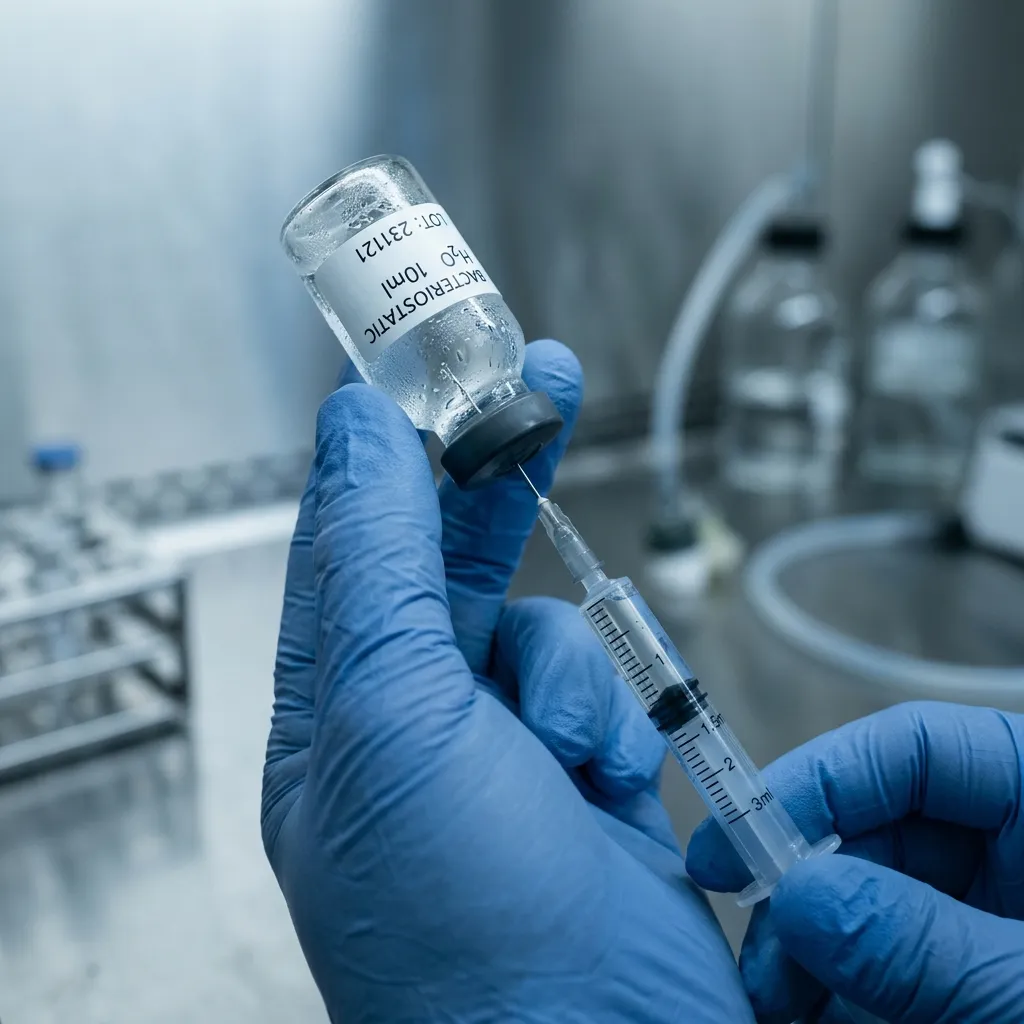
Our BAC Water is produced to the same laboratory-grade standard as every compound in our catalog and is the recommended diluent for reconstituting any peptide ordered from The Looksmaxxing Lab, unless a specific research protocol calls otherwise.
Why the Benzyl Alcohol Concentration Matters
The 0.9% benzyl alcohol concentration in bacteriostatic water is not arbitrary — it is calibrated to inhibit bacterial growth without introducing a concentration high enough to meaningfully interfere with most peptide structures during normal storage windows. Using a diluent with a substantially different preservative concentration, or substituting an unrelated solvent, can introduce unpredictable interactions with the peptide's amino acid side chains. This is why researchers should source diluent specifically manufactured and tested for peptide reconstitution rather than repurposing general-laboratory water on hand.
Understanding Peptide Degradation Pathways
Storage and handling guidance makes more sense once researchers understand the specific chemical pathways that actually degrade a peptide in solution. The three most common are hydrolysis, oxidation, and aggregation. Hydrolysis is the breaking of peptide bonds through reaction with water molecules, a process that accelerates significantly with rising temperature — this is the primary reason reconstituted peptides must be refrigerated rather than left at room temperature. Oxidation occurs when certain amino acid side chains (methionine, cysteine, and tryptophan are particularly susceptible) react with oxygen or light-generated reactive species, altering the peptide's structure and often its biological activity; this is why lyophilized vials are kept sealed, dark, and away from light exposure. Aggregation happens when individual peptide molecules begin clumping together in solution, often triggered by mechanical agitation, temperature fluctuation, or simply time — this is the underlying reason vigorous shaking is discouraged in favor of gentle swirling.
Each of these pathways operates on a different timescale and is accelerated by a different environmental factor, which is why a single storage protocol — cold, dark, undisturbed, minimal freeze-thaw — addresses all three simultaneously rather than requiring separate handling rules for each compound.
Choosing the Right Syringe and Needle Gauge
Equipment choice affects both reconstitution accuracy and the physical integrity of the peptide solution during handling. For reconstitution and for drawing small research volumes, a 0.5mL or 1mL insulin syringe marked in fine unit increments (typically 100 units per mL) offers far more precision than a standard 3mL syringe, where the same volume occupies a much smaller, harder-to-read segment of the barrel. Needle gauge matters too: a finer needle (commonly 29-31 gauge for insulin syringes) reduces the mechanical stress placed on the solution as it passes through the needle bore compared to a larger-bore needle, and produces a smaller, cleaner puncture through the vial's rubber stopper, reducing the risk of coring — small rubber fragments breaking off into the solution.
Syringes and needles used for peptide research should be single-use and disposed of properly after each session; reusing a needle increases both contamination risk and the chance of a dulled tip damaging the vial stopper on subsequent insertions.
Shipping, Transit, and Temporary Storage Excursions
Peptides frequently spend a portion of their lifecycle outside of controlled cold storage — most obviously during shipping from supplier to researcher. Reputable suppliers ship lyophilized compounds with appropriate insulation and, for temperature-sensitive orders, cold packs or gel packs designed to buffer against ambient temperature during transit. Because lyophilized (unreconstituted) peptides are considerably more temperature-stable than reconstituted solutions, brief transit excursions at ambient temperature are generally well tolerated for the dry powder form, which is one of the practical reasons compounds are shipped lyophilized rather than pre-dissolved.
The same is not true once a peptide has been reconstituted. If a research protocol requires transporting a reconstituted solution between locations — from a storage freezer to a bench in a different room, for instance — minimizing the time spent outside refrigeration and using an insulated carrier with an ice pack for any transport lasting more than a few minutes is good practice. Treat any reconstituted solution that has spent an extended, undocumented period outside refrigeration as a compromised sample rather than risk introducing unexplained variance into a protocol.
Step-by-Step Reconstitution Protocol
- Bring both vials to room temperature. Remove the lyophilized peptide vial from the freezer and let it warm naturally before opening, preventing condensation from forming on the powder.
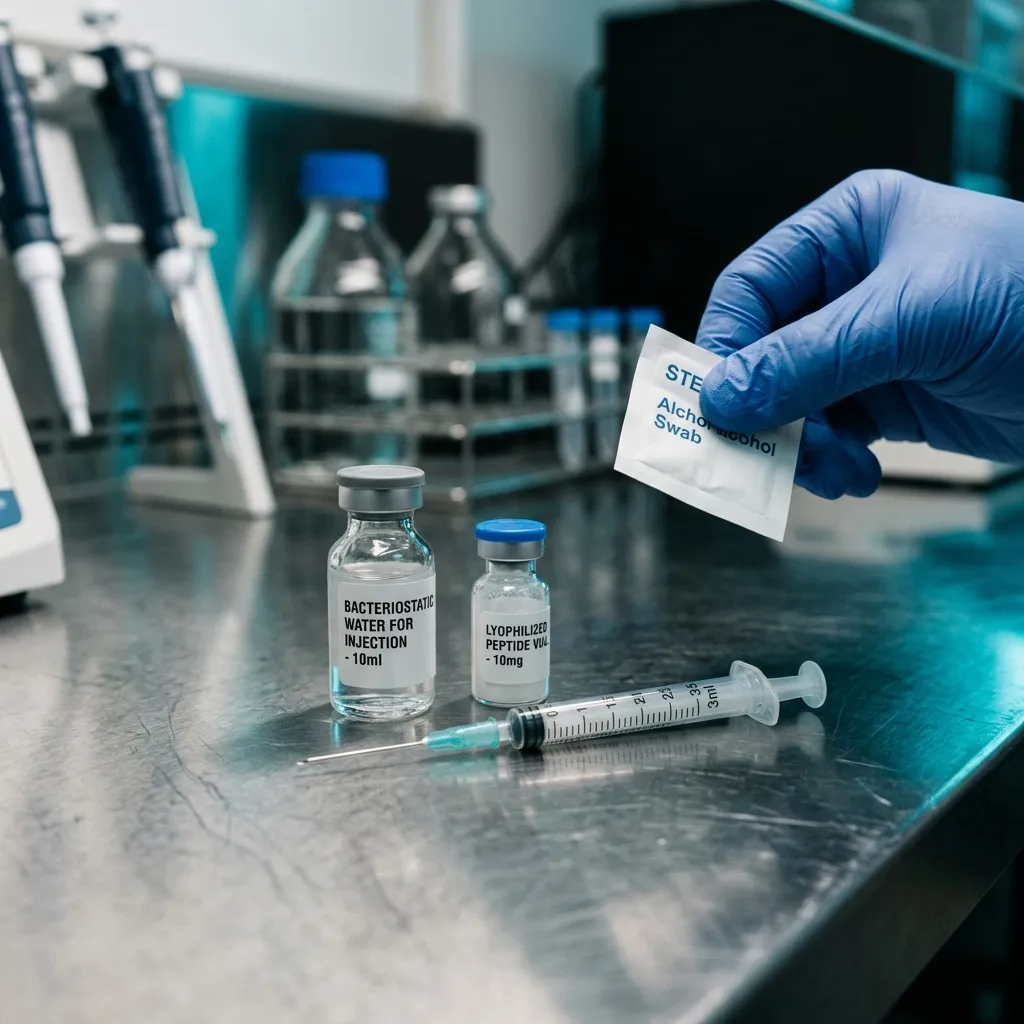
- Swab both vial tops with an alcohol wipe. This maintains a sterile entry point on the peptide vial and the bacteriostatic water vial.
- Draw the calculated volume of bacteriostatic water into a syringe. Use the volume determined by your target concentration (see the calculation section below).
- Insert the needle through the vial's rubber stopper at a slight angle. Direct the water stream gently down the interior glass wall rather than injecting it directly onto the powder.
- Allow the vial to sit, then gently swirl. Do not shake. Roll the vial gently between your palms if needed until the powder is fully dissolved into a clear solution.
- Label the vial with the reconstitution date. This lets you track the stability window from the moment of preparation, not the original manufacture date.
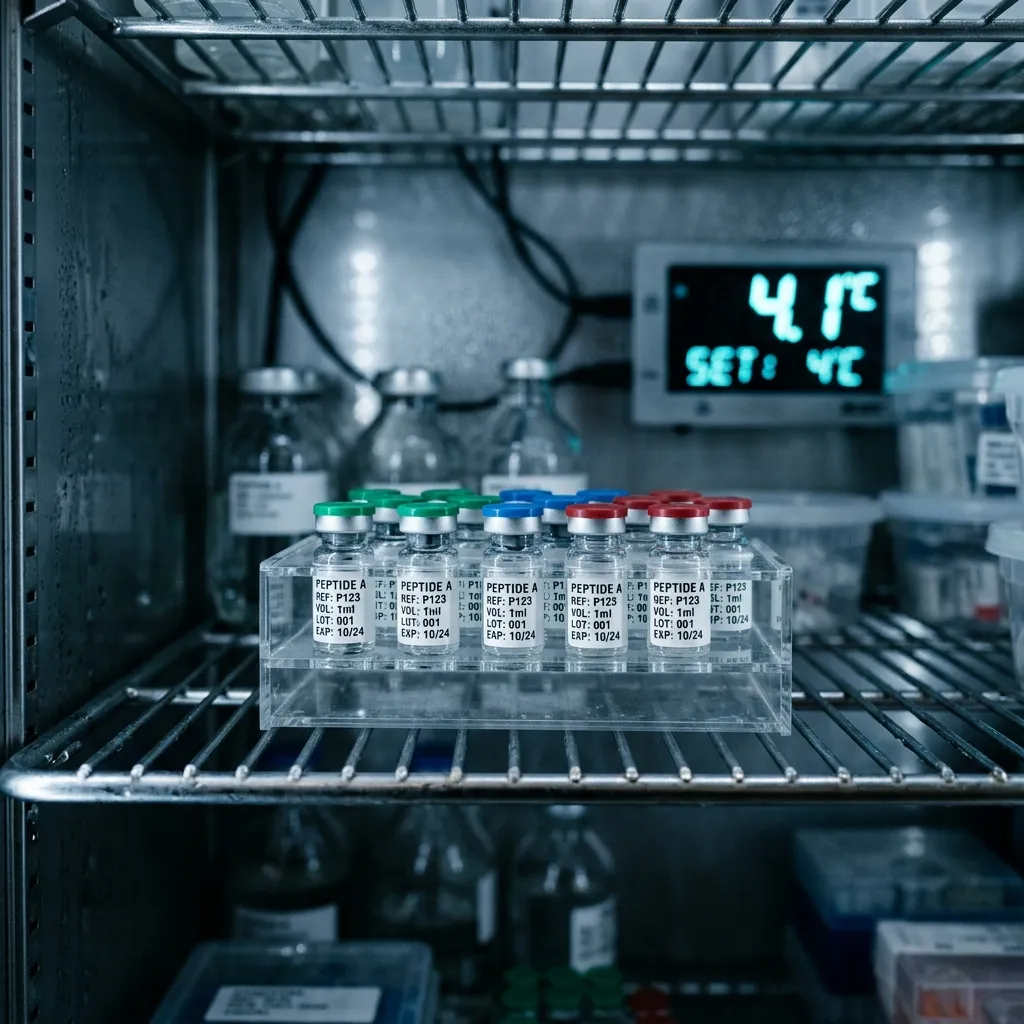
- Refrigerate immediately at 2-8°C. Return the vial to cold storage promptly after each draw.
To calculate the exact volume of bacteriostatic water needed for your target concentration before starting this process, use our Peptide Reconstitution Calculator.
Calculating Concentration
Reconstitution volume directly determines the final concentration of the solution, typically expressed in micrograms per milliliter (mcg/mL). The relationship is straightforward: total peptide mass in the vial (in mg, converted to mcg) divided by the volume of bacteriostatic water added (in mL) yields the concentration per mL. For example, a 5mg vial reconstituted with 2mL of bacteriostatic water yields a concentration of 2,500 mcg/mL. Because this figure directly determines dosing accuracy for any downstream research protocol, manual arithmetic errors here are one of the most common sources of experimental inconsistency — our reconstitution calculator is built specifically to eliminate that risk.
Storage Temperatures at Every Stage
| Stage | Temperature | Typical Stability Window |
|---|---|---|
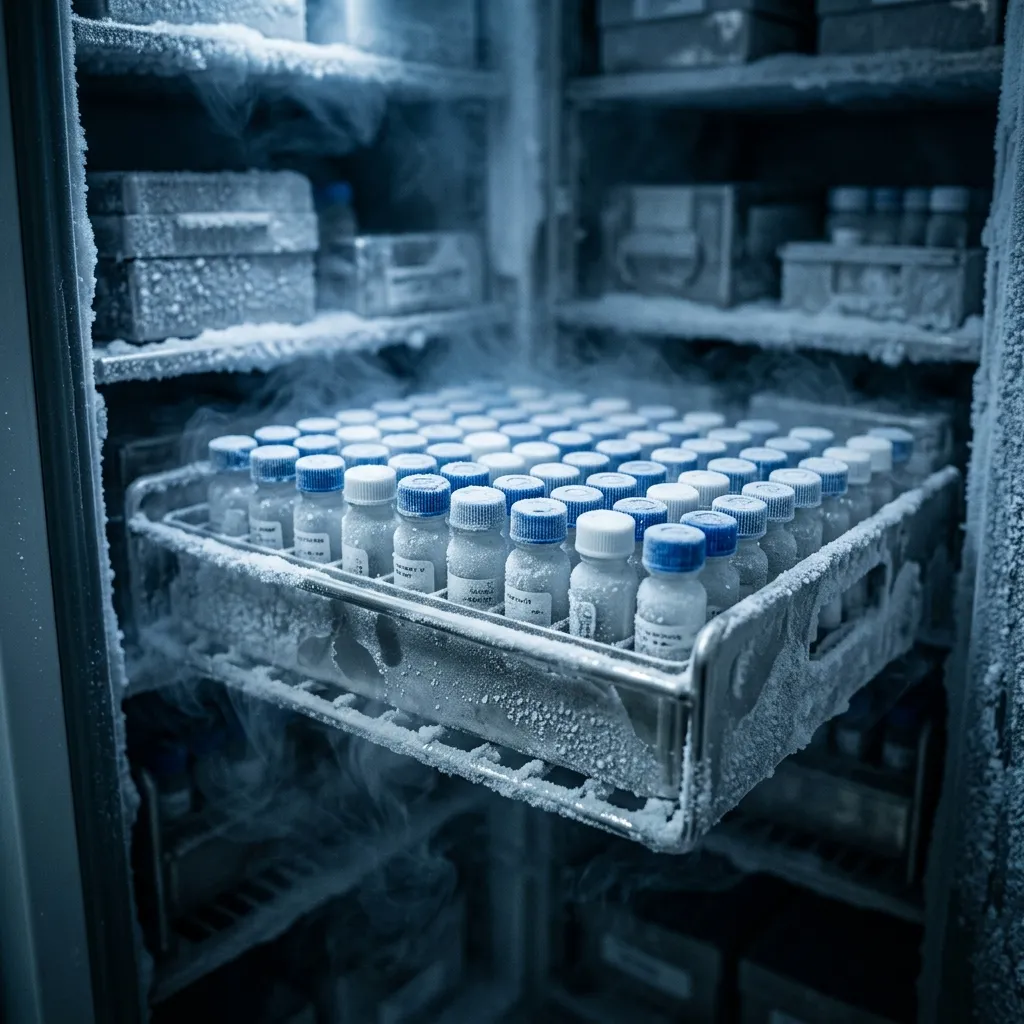
| Lyophilized (sealed, unopened) | -20°C, dark, dry | 24 months or longer |
| Reconstituted (bacteriostatic water) | 2-8°C, refrigerated | ~14-30 days, compound-dependent |
| Reconstituted (sterile water) | 2-8°C, refrigerated | ~24 hours |
Powder Appearance and Visual Quality Checks
Before reconstitution, lyophilized peptide powder should appear as a uniform, tightly-packed white or off-white cake or fine powder at the bottom of the vial. Discoloration (yellowing or browning), a visibly collapsed or shrunken cake, or powder that appears clumped and unevenly distributed can all indicate that a vial was exposed to conditions outside its intended storage range — most commonly heat, light, or moisture ingress — even if the vial appears sealed. After reconstitution, the resulting solution should be visually clear and free of any floating particulate matter or persistent cloudiness. A solution that remains hazy after adequate time to fully dissolve, or that develops visible particles after a period in storage, should not be used in an active protocol; these are simple, no-cost visual checks that catch a meaningful fraction of handling problems before they compound into unexplained experimental variance downstream.
Compound-Specific Notes
These storage principles apply consistently across our catalog, though longer or more structurally complex sequences generally tolerate handling errors less forgivingly than short, stable ones. Longevity and cellular-signaling peptides such as Epithalon and NAD+ should be handled with the same cold-chain discipline as growth-hormone secretagogues like CJC-1295 No-DAC and the Tesamorelin / Ipamorelin stack. Antimicrobial and repair-focused compounds such as LL-37 and KPV, hormonal peptides like Oxytocin, antioxidant compounds such as Glutathione, and nootropic pairings like Semax / Selank all follow the same reconstitution and cold-chain protocol outlined above.
A Worked Example: From Vial to Vial-Ready Solution
Consider a 10mg vial of a lyophilized peptide reconstituted with 2mL of bacteriostatic water. Converting 10mg to micrograms gives 10,000mcg; dividing by the 2mL volume yields a concentration of 5,000mcg/mL, or 5mcg per 0.001mL (1 microliter) drawn. If a research protocol calls for a 250mcg dose, the corresponding draw volume would be 0.05mL — a figure precise enough that most researchers prefer to work with an insulin syringe marked in fine unit increments rather than estimating by eye. This is exactly the kind of arithmetic where a dedicated calculator removes a persistent source of protocol-to-protocol inconsistency, which is why we built our Peptide Reconstitution Calculator to handle the conversion automatically from vial mass, diluent volume, and target dose.
Maintaining a Reproducible Storage Log
Just as batch-specific COA tracking strengthens reproducibility on the purity side, a simple storage log strengthens it on the handling side. Recording the reconstitution date, diluent used, calculated concentration, and storage location for every vial makes it possible to audit exactly how far into its stability window a given sample sits at the time it is used in an assay. This matters most in longitudinal or multi-cohort research, where a vial reconstituted three weeks ago and a freshly prepared vial from the same batch may behave differently in downstream results — a discrepancy that is trivial to explain with a log and easy to misattribute to biological variance without one.
Common Mistakes That Degrade Peptides
- Shaking instead of swirling. Mechanical shear force from shaking can denature a peptide's secondary structure and permanently reduce its bioactivity.
- Repeated freeze-thaw cycling. Ice crystal formation physically disrupts peptide bonds with each cycle; reconstituted solutions should stay refrigerated, not refrozen.
- Leaving vials at room temperature for extended periods. Heat accelerates hydrolysis and oxidation well beyond the compound's expected stability window.
- Using expired or non-preserved diluent. Sterile water past its single-use window introduces contamination risk into an otherwise clean protocol.
- Skipping documentation. Failing to label a vial with its reconstitution date makes it impossible to track how far into its stability window a given sample actually is.
Correct handling only matters if the underlying compound was verified in the first place — see our companion guide on reading a peptide Certificate of Analysis for how to confirm purity and identity before a vial ever reaches the bench. Lot-specific COA documentation for every compound referenced here is available in our Certificates of Analysis Library, and additional sourcing questions are covered on our FAQ page.
Comprehensive Frequently Asked Questions (FAQ)
What is bacteriostatic water and why is it used to reconstitute peptides?
Bacteriostatic water is sterile water containing 0.9% benzyl alcohol, a preservative that inhibits microbial growth. Because a reconstituted peptide vial is typically drawn from multiple times over several weeks, bacteriostatic water allows the solution to remain usable for an extended window, whereas plain sterile water has no antimicrobial protection and should be treated as single-use.
Can I use plain sterile water instead of bacteriostatic water?
Sterile water can be used, but it has no preservative, so a vial reconstituted with it should be considered viable for roughly 24 hours before contamination risk rises significantly. Bacteriostatic water is strongly preferred for any protocol that draws from the same vial across multiple sessions, extending the usable window to approximately 28-30 days under refrigeration.
How long does a reconstituted peptide last once refrigerated?
Once reconstituted with bacteriostatic water and stored at 2-8°C, most research peptides remain stable for roughly 14 to 30 days, depending on the specific compound's sequence and bond stability. Always default to the shorter end of that range and consult the specific compound's documentation, since longer, more complex peptide chains generally degrade faster than short, stable sequences.
How do I calculate the correct reconstitution volume for a peptide?
Reconstitution volume determines the final concentration of the solution, expressed as mass per volume (for example, mcg/mL). The calculation depends on the total peptide mass in the vial (in mg) and the volume of bacteriostatic water added (in mL). Because this arithmetic directly determines dosing accuracy in a research protocol, we recommend using our Peptide Reconstitution Calculator rather than performing it manually.
Should I shake the vial after adding bacteriostatic water?
No. Vigorous shaking introduces mechanical shear force and excess air bubbles that can denature the peptide's secondary structure, permanently damaging its bioactivity. Instead, direct the water stream gently down the interior glass wall of the vial and let it swirl on its own, or roll the vial gently between your palms until the powder is fully dissolved.
What is the correct storage temperature for lyophilized (freeze-dried) peptides?
Unopened, lyophilized peptide vials should be stored at -20°C, protected from light and moisture, in their original sealed packaging. Stored this way, most lyophilized peptides remain stable for 24 months or longer. Before opening a vial pulled from the freezer, allow it to reach room temperature first to prevent condensation from forming on the powder.
Can reconstituted peptides be frozen for longer-term storage?
Repeated freeze-thaw cycling is one of the more common causes of peptide degradation, since the formation and melting of ice crystals can physically disrupt peptide bonds with each cycle. Reconstituted solutions should be kept refrigerated at 2-8°C rather than refrozen, and any single vial should not be subjected to more than one freeze-thaw event if freezing cannot be avoided.
What happens if a peptide vial is left at room temperature?
Extended room-temperature exposure accelerates hydrolysis and oxidation of the peptide bonds, degrading the compound's structural integrity and bioactivity well before its expected shelf-life window. A brief room-temperature equilibration period before opening a freezer-stored vial is normal, but reconstituted solutions should be returned to refrigeration promptly after each use.
How can I tell if a peptide has degraded?
Visually, a reconstituted peptide solution should remain clear and free of particulate matter or cloudiness — discoloration or visible sediment is a strong indicator of degradation or contamination and the vial should be discarded. Because subtle molecular degradation is not always visible to the eye, adhering strictly to documented storage windows is the most reliable safeguard.
Do I need a prescription to order bacteriostatic water or research peptides?
No. Bacteriostatic water and the research peptides sold by The Looksmaxxing Lab are classified strictly as Research Use Only (RUO) laboratory reagents, not FDA-approved therapeutics, and are not intended for human or veterinary consumption. No medical prescription is required for qualified researchers.