Retatrutide Peptide: Complete Research Guide to the GLP-1/GIP/Glucagon Triple Agonist
Retatrutide has become one of the most intensely studied peptide compounds in metabolic research, generating search volume that exceeds every other emerging peptide in the research community as of mid-2026. Developed by Eli Lilly under the designation LY-3437943, retatrutide is a synthetic peptide engineered to simultaneously activate three metabolic receptor systems: the glucagon-like peptide-1 receptor (GLP-1R), the glucose-dependent insulinotropic polypeptide receptor (GIPR), and the glucagon receptor (GCGR).
This triple-agonist architecture makes retatrutide mechanistically distinct from every approved or widely studied incretin compound, and it explains the rapid expansion of research interest across academic, institutional, and independent laboratories. This guide provides a comprehensive, research-oriented overview of retatrutide's molecular design, receptor pharmacology, published preclinical and clinical evidence, and practical considerations for laboratory procurement. It is written for researchers and peptide scientists — not consumers. All compounds referenced are for research use only.
Molecular Architecture: How Retatrutide Is Engineered
Retatrutide is a 39-amino-acid synthetic peptide with several structural modifications that distinguish it from native incretin hormones and earlier-generation analogs. The molecular design reflects a deliberate engineering strategy to achieve balanced multi-receptor agonism with a pharmacokinetic profile suitable for once-weekly research dosing: an amino acid backbone resistant to DPP-4 and neutral endopeptidase degradation, alpha-aminoisobutyric acid (Aib) substitution at key positions for steric protection against proteolytic cleavage, and a C18 fatty diacid moiety enabling non-covalent albumin binding that extends half-life from minutes to days.
The Three-Receptor Mechanism: Why Triple Agonism Matters for Research
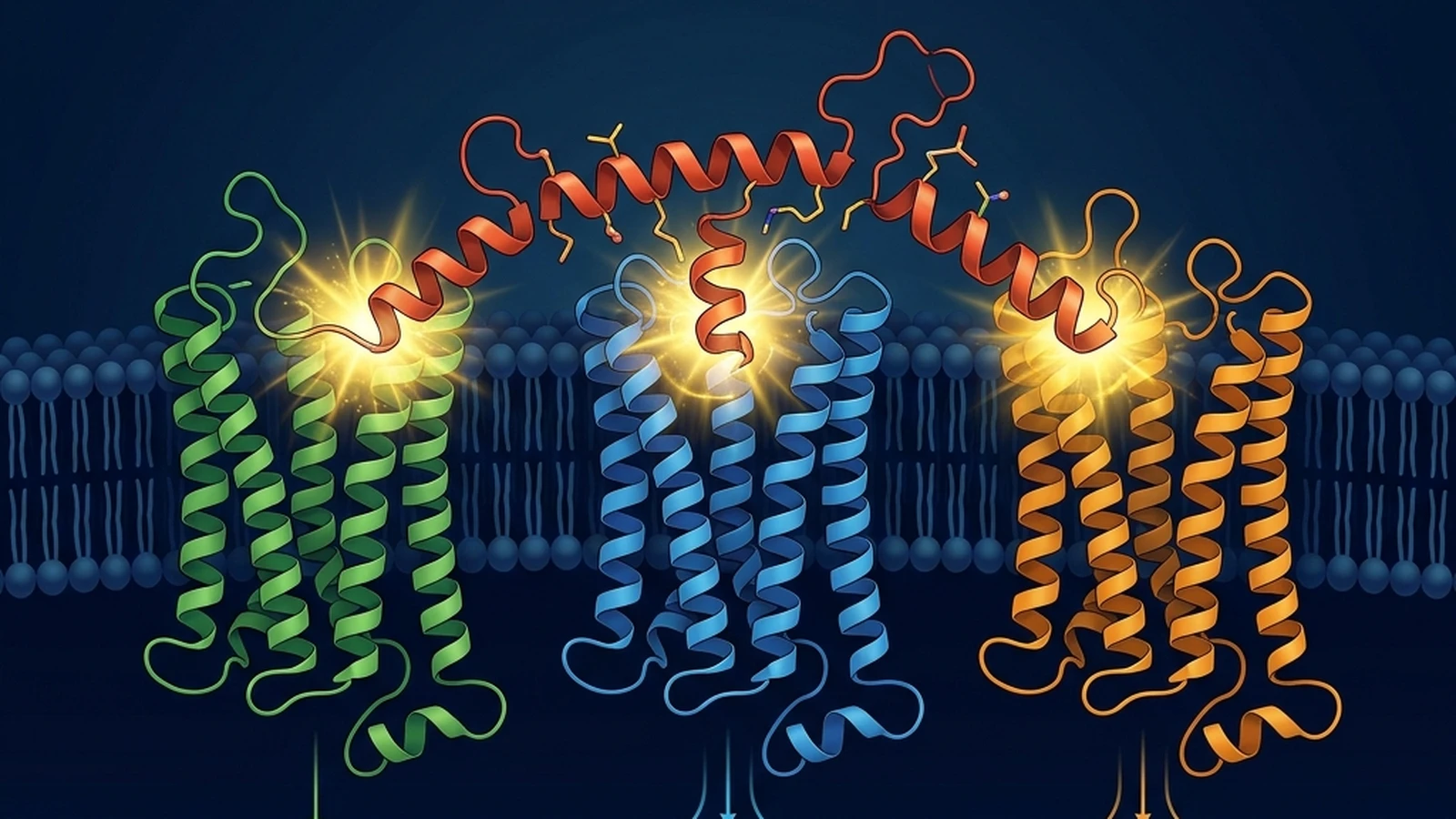
The scientific rationale for triple agonism rests on a straightforward pharmacological principle: each additional receptor target adds a metabolic pathway inaccessible to the prior generation of compounds.
First Axis: GLP-1R — Appetite Regulation and Insulin Secretion
GLP-1 receptor activation drives glucose-dependent insulin secretion, suppresses postprandial glucagon release, delays gastric emptying, and modulates central appetite signaling in the hypothalamus. This is the mechanism shared with semaglutide, liraglutide, and the GLP-1 agonist research class broadly — the foundational layer of retatrutide's activity profile.
Second Axis: GIPR — Complementary Insulinotropic Signaling
GIP receptor co-activation provides a second insulinotropic pathway that operates additively with GLP-1R signaling. Published research on dual GLP-1/GIP agonism — studied extensively through tirzepatide — has demonstrated that combined activation produces greater glycemic improvement and body weight effects than GLP-1R agonism alone in preclinical and clinical models. Retatrutide retains this dual layer and builds upon it.
Third Axis: GCGR — Hepatic Fat Oxidation and Energy Expenditure
The glucagon receptor arm is the differentiating mechanism. In preclinical models, GCGR agonism promotes hepatic fat oxidation through enhanced lipid mobilization and beta-oxidation in hepatocytes, and drives an increase in basal energy expenditure — a thermogenic effect mediated by the liver that operates independently of appetite suppression. This pathway is not accessible through GLP-1 or GLP-1/GIP agonism alone, and represents the mechanistic advancement that separates triple agonists from all prior compound classes.

Published Research Data: Phase 2 and Phase 3 Evidence
The pivotal Phase 2 trial, published in the New England Journal of Medicine (Jastreboff et al., 2023), randomized 338 adults with obesity to multiple retatrutide dose tiers or placebo over 48 weeks. The highest-dose cohort (12 mg) demonstrated mean body weight reductions exceeding 24% from baseline — the largest single-compound reduction reported in a controlled obesity trial at the time. The study also reported reductions in hepatic fat fraction measured by MRI-PDFF, suggesting direct hepatic effects attributable to the glucagon receptor component.
A parallel Phase 2 trial in adults with type 2 diabetes (Rosenstock et al., Lancet, 2023) demonstrated significant reductions in HbA1c alongside body weight effects, confirming that the triple-agonist mechanism produces metabolic improvements across both glycemic and adiposity endpoints simultaneously. Eli Lilly's Phase 3 TRIUMPH program encompasses multiple studies across obesity, type 2 diabetes, knee osteoarthritis, obstructive sleep apnea, and MASLD. TRIUMPH-1 (n=2,339) reported topline results in May 2026, confirming dose-dependent weight reduction at 80 weeks, with the 12 mg cohort demonstrating mean body weight reduction of approximately 28%.
It is essential for researchers to understand that this clinical trial data pertains to Eli Lilly's investigational drug product — not research-grade peptide material. Research-grade retatrutide is for laboratory use only.
Retatrutide vs. Tirzepatide vs. Semaglutide: Research Compound Comparison
| Parameter | Semaglutide | Tirzepatide | Retatrutide |
|---|---|---|---|
| Receptor targets | GLP-1R | GLP-1R + GIPR | GLP-1R + GIPR + GCGR |
| Receptor count | 1 | 2 | 3 |
| Hepatic fat effect | Indirect | Moderate | Direct (GCGR-mediated) |
| Published Phase 2 weight reduction | ~15% (STEP trials) | ~21% (SURMOUNT-1) | ~24% (NEJM 2023) |
This comparison underscores why retatrutide occupies a distinct position in the research landscape: it subsumes the mechanisms of both prior generations while adding the glucagon-mediated hepatic pathway that is generating the most active experimental questions in metabolic peptide science. For a deeper comparative analysis against GHRH-axis compounds, see our companion article on Tesamorelin vs. Retatrutide in visceral fat research.
A Note on GLP-3 Nomenclature
Researchers will frequently encounter the term "GLP-3" used within the peptide research community to describe this same triple-receptor mechanism class. GLP-3 is not a distinct compound — it is a research-community designation for a triple GLP-1/GIP/glucagon agonist modeled after retatrutide's receptor profile. Our companion guide, GLP-3 Peptide: Triple Receptor Agonism and Mechanism of Action, covers this nomenclature distinction and the broader triple-agonist research landscape in more detail.
Research-Grade Sourcing: Purity and Verification Standards
The rapid expansion of retatrutide research demand has brought a corresponding increase in vendor proliferation, making sourcing diligence more important than ever. Researchers should apply the same verification standards used for any critical reference compound: independent third-party HPLC testing confirming ≥99% peptide purity, LC-MS molecular weight verification ruling out truncated or misidentified material, lot-specific COA documentation publicly accessible for independent verification, and US-based synthesis in ISO-certified facilities.

The Looksmaxxing Lab manufactures retatrutide research peptide in US-based facilities, with every batch independently verified by third-party HPLC and LC-MS analysis. Lot-specific Certificates of Analysis are available in our public COA library. For reconstitution protocols, consult our Peptide Reconstitution and Storage Guide, and use the Peptide Calculator for concentration calculations.
Comprehensive Frequently Asked Questions (FAQ)
What is retatrutide?
Retatrutide (LY-3437943) is a synthetic peptide engineered to simultaneously activate three metabolic receptors: GLP-1, GIP, and glucagon. Developed by Eli Lilly, it is the first triple receptor agonist to reach Phase 3 clinical trials. Research-grade retatrutide is used in laboratory settings to study multi-receptor metabolic signaling and is not intended for human consumption.
How does retatrutide work?
Retatrutide activates three G protein-coupled receptors in a single molecule. GLP-1R activation drives insulin secretion and appetite signaling. GIPR activation provides a complementary insulinotropic pathway. GCGR activation promotes hepatic fat oxidation and increases basal energy expenditure. The combined effect creates a broader metabolic research profile than single or dual agonist compounds.
What is the difference between retatrutide and tirzepatide?
Tirzepatide is a dual agonist activating GLP-1 and GIP receptors. Retatrutide adds a third target — the glucagon receptor — which introduces direct hepatic fat oxidation and elevated energy expenditure not present in dual-agonist compounds. In published Phase 2 data, the highest retatrutide dose cohort demonstrated approximately 24% body weight reduction versus approximately 21% for tirzepatide's highest dose, though direct head-to-head comparison trials have not been conducted.
What is the difference between retatrutide and semaglutide?
Semaglutide is a single GLP-1 receptor agonist. Retatrutide engages three receptors simultaneously — GLP-1R, GIPR, and GCGR. The additional receptor targets add metabolic pathways (GIP-mediated insulinotropic enhancement and glucagon-mediated hepatic fat oxidation) that semaglutide cannot access through GLP-1 agonism alone.
Is retatrutide FDA-approved?
No. As of mid-2026, retatrutide remains an investigational compound in Eli Lilly's Phase 3 TRIUMPH clinical trial program. No regulatory approval or NDA filing has occurred. Research-grade retatrutide is available for laboratory use only and is not a substitute for the investigational drug product studied in clinical trials.
Where can I buy retatrutide peptide for research?
The Looksmaxxing Lab supplies research-grade retatrutide synthesized in US-based, ISO-certified facilities with ≥99% HPLC purity, LC-MS molecular identity verification, and lot-specific COA documentation. All products are for research use only.