GLP-3 Peptide: Triple Receptor Agonism, Mechanism of Action, and What Researchers Need to Know in 2026
GLP-3 peptide has rapidly emerged as one of the most discussed research compounds in metabolic peptide science heading into the second half of 2026. Unlike its predecessors in the incretin peptide class — single-pathway GLP-1 analogs such as semaglutide, and dual GLP-1/GIP agonists such as tirzepatide — GLP-3 engages three G protein-coupled receptors simultaneously: the glucagon-like peptide-1 receptor (GLP-1R), the glucose-dependent insulinotropic polypeptide receptor (GIPR), and the glucagon receptor (GCGR).
This triple-agonist profile represents a structural departure from every prior generation of incretin-based research compound, and it is the reason GLP-3 has drawn accelerating interest from metabolic researchers, endocrinology laboratories, and peptide scientists worldwide. This guide provides a research-oriented overview of GLP-3's receptor biology, molecular architecture, preclinical evidence base, and sourcing considerations — written for laboratory professionals, not consumers. All compounds referenced are for research use only.
What Is GLP-3 Peptide? Defining the Triple-Agonist Class
In current research nomenclature, GLP-3 refers to a synthetic peptide analog modeled after the investigational compound retatrutide (LY-3437943), developed by Eli Lilly. The designation "GLP-3" is used within the research peptide community to distinguish this triple-receptor compound class from single-pathway GLP-1 analogs and dual GLP-1/GIP agonists. It is not a naturally occurring peptide hormone; rather, it is a synthetic construct engineered to co-activate three distinct metabolic receptor systems within a single molecular framework.
The compound's structure incorporates several pharmacological enhancements over endogenous incretin hormones: a C18 fatty diacid moiety for albumin binding and extended circulating half-life, an alpha-aminoisobutyric acid (Aib) substitution for proteolytic resistance, and a carefully balanced agonist potency ratio across all three receptor targets. This engineering enables once-weekly research dosing protocols in preclinical models — a significant advancement over native GLP-1, which has a plasma half-life measured in minutes.

Receptor Biology: How GLP-3 Engages Three Distinct Metabolic Pathways
GLP-1 receptor activation is the foundational mechanism shared across the entire incretin peptide research class — stimulating glucose-dependent insulin secretion, suppressing glucagon release, delaying gastric emptying, and modulating hypothalamic appetite signaling. GLP-3 retains full GLP-1R agonist activity as its baseline layer.
GIP receptor activation adds a second, complementary incretin axis. Dual GLP-1/GIP agonism — the mechanism studied in tirzepatide — has demonstrated additive effects on insulin secretion and glycemic regulation. GLP-3 incorporates this dual layer as its intermediate mechanistic tier.
The glucagon receptor component is what distinguishes GLP-3 from every prior compound class. In isolation, glucagon receptor agonism promotes hepatic glucose output and glycogenolysis — effects that would seem counterproductive in metabolic research. However, when combined with concurrent GLP-1R and GIPR agonism, the insulinotropic effects of those pathways counterbalance the glycemic impact of glucagon signaling while preserving the metabolic rate increase. The net result observed in preclinical models is a compound that adds hepatic fat oxidation and elevated basal energy expenditure — pathways not accessible through GLP-1 or dual GLP-1/GIP agonism alone.

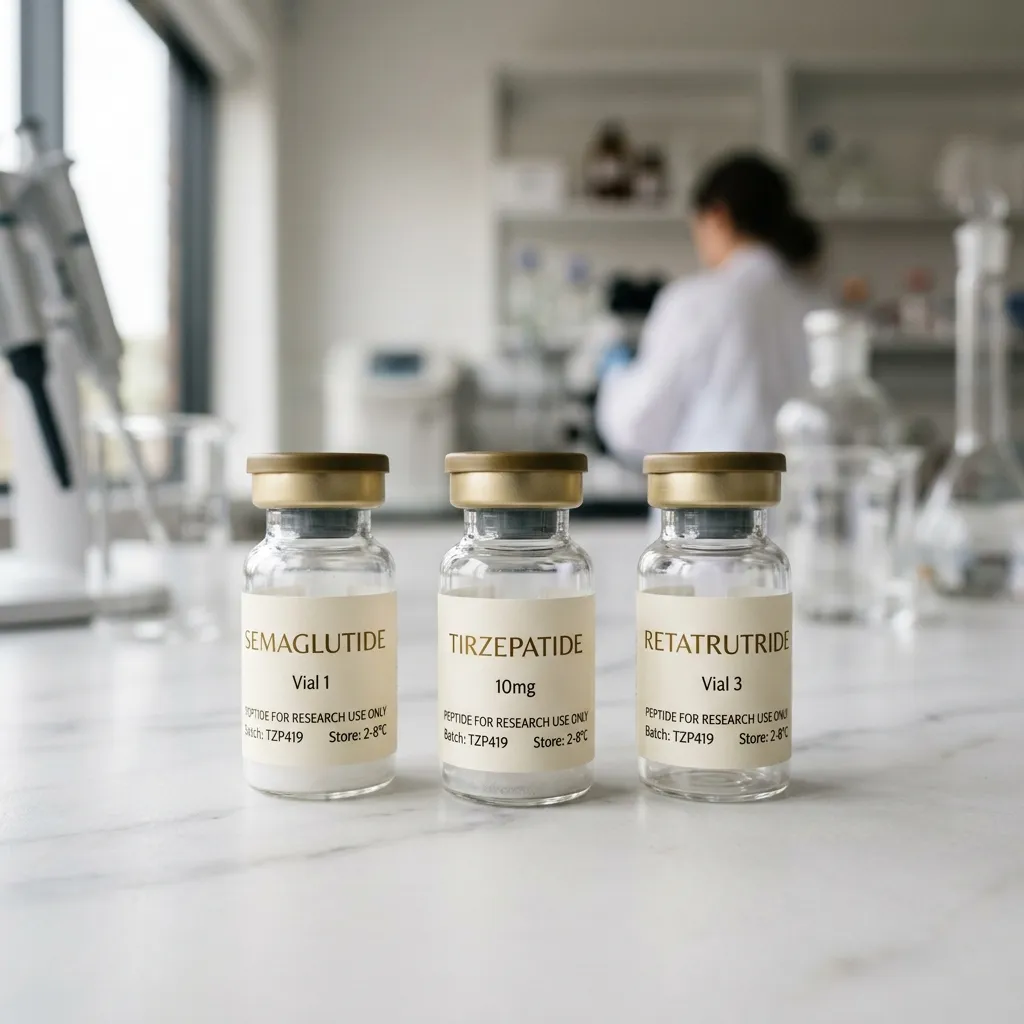
GLP-3 vs. Semaglutide vs. Tirzepatide: A Receptor Comparison for Researchers
| Attribute | Semaglutide | Tirzepatide | GLP-3 |
|---|---|---|---|
| GLP-1R activation | Yes | Yes | Yes |
| GIPR activation | No | Yes | Yes |
| GCGR activation | No | No | Yes |
| Hepatic fat oxidation | Indirect | Indirect | Direct (via GCGR) |
This comparison illustrates why GLP-3 has attracted rapid research interest: it offers receptor coverage that subsumes the mechanisms of both prior generations while adding a metabolically distinct glucagon-mediated pathway. For researchers designing comparative studies, GLP-3 serves as the broadest-spectrum reference compound currently available in the incretin class.
Preclinical Evidence Base: What Published Research Shows
The scientific interest in GLP-3's triple-agonist mechanism is grounded in published preclinical and early-phase clinical data on the parent compound retatrutide. A Phase 2 trial published in the New England Journal of Medicine (Jastreboff et al., 2023) evaluated retatrutide in 338 adults with obesity over 48 weeks, with the highest-dose cohort demonstrating mean body weight reductions exceeding 24% from baseline. Subsequent Phase 2 data in type 2 diabetes populations (Rosenstock et al., Lancet, 2023) demonstrated significant HbA1c reductions alongside body weight effects. The Phase 3 TRIUMPH program reported topline results from TRIUMPH-1 in May 2026, confirming the dose-dependent weight reduction profile at 80 weeks. For a full breakdown of this trial data and the compound's molecular architecture, see our companion guide, Retatrutide Peptide: Complete Research Guide to the Triple Agonist.
It is important for researchers to understand that this clinical data pertains to the investigational drug product studied in controlled human trials — not to research-grade peptide material. Research-grade GLP-3 is used in preclinical laboratory settings as a reference compound for studying triple receptor agonism, GPCR signal transduction, and multi-receptor crosstalk. It is not for human use.
Why GLP-3 Research Interest Is Accelerating in 2026
- Mechanistic novelty. GLP-3 is among the first commercially available research peptides offering simultaneous engagement of three metabolic receptor systems, filling a gap for laboratories studying GPCR biology and multi-target pharmacology.
- Published efficacy signal. The NEJM Phase 2 data and subsequent TRIUMPH results have generated significant scientific media coverage, driving awareness among researchers who may not have previously worked with incretin compounds.
- Differentiation from saturated categories. GLP-3's glucagon receptor component opens new experimental questions — hepatic fat oxidation kinetics, energy expenditure modeling, and glucagon-mediated thermogenesis — that remain largely unexplored.
- Synthesis maturation. Research-grade GLP-3 availability has expanded substantially in 2026 as peptide synthesis protocols have matured, with HPLC-verified material meeting research purity standards now reliably accessible from qualified US-based suppliers.

Sourcing Standards: What to Verify Before Procuring GLP-3 for Research
As with any research peptide, the quality of GLP-3 material directly impacts experimental reproducibility. Researchers should verify HPLC purity ≥99% confirmed by independent third-party testing, LC-MS identity verification confirming the exact molecular weight matches the target GLP-3 sequence, a lot-specific Certificate of Analysis shipped with every batch, and US-based synthesis in ISO-certified facilities.
The Looksmaxxing Lab is expanding its catalog of triple-agonist research compounds, synthesized in US-based facilities and independently verified by third-party HPLC and LC-MS testing, with lot-specific COA documentation for every batch. Researchers can access our full COA library and browse current availability in our shop.
Reconstitution and Storage Considerations
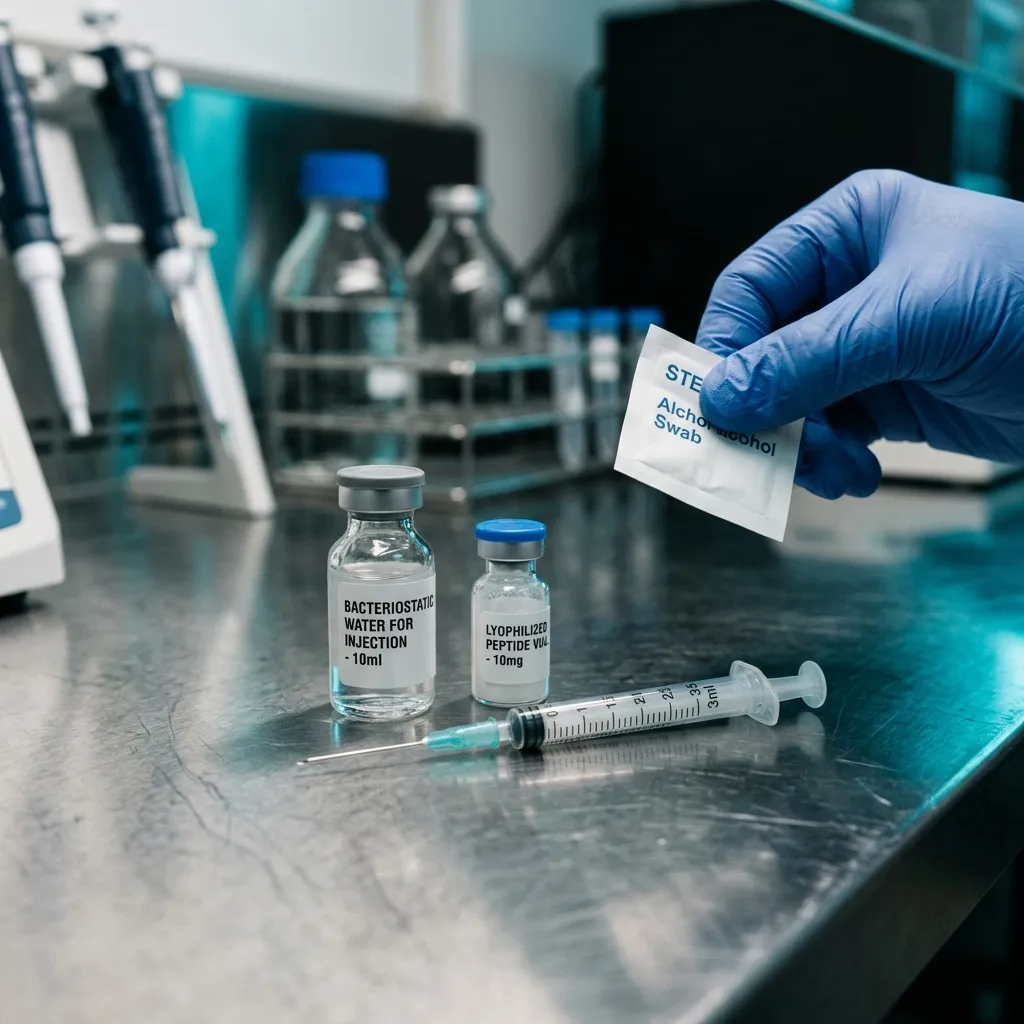
GLP-3 is supplied as a lyophilized (freeze-dried) powder requiring reconstitution prior to laboratory use. Researchers should follow standard peptide reconstitution protocols using bacteriostatic water, calculating concentration based on the desired experimental parameters — see our full Peptide Reconstitution and Storage Guide for the step-by-step protocol, and the Peptide Calculator for concentration and volume calculations. Post-reconstitution, GLP-3 should be stored under refrigeration (2–8°C) and protected from light; lyophilized material prior to reconstitution should be stored frozen (−20°C) for long-term stability.
Comprehensive Frequently Asked Questions (FAQ)
What is GLP-3 peptide?
GLP-3 is a synthetic research peptide that functions as a triple receptor agonist, simultaneously engaging glucagon-like peptide-1 receptors (GLP-1R), glucose-dependent insulinotropic polypeptide receptors (GIPR), and glucagon receptors (GCGR). It is modeled after the investigational compound retatrutide and is used in laboratory settings as a reference compound for studying multi-receptor metabolic signaling. It is not intended for human consumption.
How does GLP-3 differ from GLP-1 peptides like semaglutide?
Semaglutide activates only the GLP-1 receptor. GLP-3 activates three receptors simultaneously — GLP-1R, GIPR, and GCGR — in a single molecule. The glucagon receptor component adds hepatic fat oxidation and increased energy expenditure pathways that are not accessible through GLP-1 agonism alone, making GLP-3 a mechanistically distinct compound class for research purposes.
What is the difference between GLP-3 and tirzepatide?
Tirzepatide is a dual agonist targeting GLP-1 and GIP receptors. GLP-3 adds a third receptor target — the glucagon receptor (GCGR) — creating a broader engagement profile. In preclinical models, this triple-agonist mechanism has been associated with additional metabolic effects, including direct hepatic fat oxidation, that dual agonists do not produce.
Is GLP-3 the same as retatrutide?
GLP-3 is the research peptide community's designation for a triple GLP-1/GIP/glucagon receptor agonist modeled after Eli Lilly's investigational compound retatrutide (LY-3437943). Research-grade GLP-3 is used as a laboratory reference compound and is structurally distinct from the clinical drug product studied in Eli Lilly's TRIUMPH trial program.
What purity standard should GLP-3 meet for research?
Research-grade GLP-3 should meet a minimum of ≥99% HPLC-verified purity, confirmed by independent third-party testing. LC-MS mass spectrometry should verify molecular identity, and each batch should ship with a lot-specific Certificate of Analysis.
Where can I buy GLP-3 peptide for research?
The Looksmaxxing Lab is expanding its catalog to include research-grade GLP-3 synthesized in US-based, ISO-certified facilities with ≥99% HPLC purity, LC-MS identity verification, and lot-specific COA documentation. Visit our shop to view current triple-agonist research compound availability. All products are for research use only.